
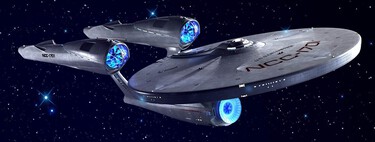
The Mid-1970s: A Unique Moment for Star Trek
In the mid-1970s, ‘Star Trek’ was experiencing an unexpected resurgence in popularity. Originally canceled in 1969 after just three seasons, the show found new life through continuous reruns and the growing enthusiasm of its fanbase. This phenomenon sparked Paramount’s interest in reviving the franchise. In 1976, the studio took a significant leap by announcing the production of a film titled ‘Planet of the Titans’, which aimed to expand the original series into uncharted cinematic realms.
The Origin of Planet of the Titans
Producer Gerald Isenberg took the reins of the project in July 1976, envisioning ‘Star Trek’ as a high-caliber cinematic experience. Paramount tapped Philip Kaufman to direct—a choice that was unconventional for a franchise film. Kaufman, known for his various acclaimed works, brought a unique lens to the project, although his past films had little in common with the science fiction genre.
To pen the screenplay, British writers Chris Bryant and Allan Scott were selected. Their work was heavily influenced by Olaf Stapledon’s novel ‘The Last and the First Humanity’, exploring human evolution over eons. The decision to bring NASA engineer Jesco von Puttkamer on board as a scientific advisor highlighted the project’s ambition, while renowned designer Ralph McQuarrie was set to create the film’s visual aesthetics.
Creative Conflicts Arise
As development progressed, creative tensions grew. Kaufman aimed for a film that would rival the visual and philosophical intricacies of ‘2001: A Space Odyssey’, while Gene Roddenberry, the original series creator, stood firm on preserving the show’s core essence. Writers Bryant and Scott found themselves caught in the middle, attempting to reconcile these two conflicting visions as the budget ballooned from an initial three million dollars to ten.
The Plot of Planet of the Titans
The storyline was ambitious: Captain James T. Kirk had been missing for three years. During a rescue mission near a black hole, the USS Enterprise remained operational but without its captain. Spock, having returned to Vulcan, was called back into action when anomalies emerged from the black hole. The crew discovers a planet trapped inside, home to an advanced civilization known as the Titans.
In a dramatic twist, the Enterprise would enter the black hole, leading them to discover their connection to the mythological Titans. Kirk was envisioned as Prometheus, the figure who brings fire to humanity, raising questions about time, existence, and the cyclical nature of history.
The Cancellation of Planet of the Titans
Despite submitting the first draft on March 1, 1977, Bryant and Scott eventually walked away from the project. Kaufman took the task of reworking the script but faced unforeseen obstacles, including the last-minute reinstatement of Kirk into the storyline. Shortly after reaching a semblance of resolution, Paramount abruptly canceled the film in May 1977, just weeks before ‘Star Wars’ premiered. Kaufman famously recalled a studio executive’s remark, stating there was “no future in science fiction.” This cancellation reflected broader industry fears that ‘Star Wars’ would saturate the market.
The Aftermath and Legacy
Interestingly, ‘Planet of the Titans’ wasn’t the first or last failed attempt to transition ‘Star Trek’ to the big screen. Other ambitious but ultimately scuttled projects preceded it, including works by Roddenberry himself. After the cancellation, fragments of the script and designs found new life in later ‘Star Trek’ productions, including the release of ‘Star Trek: The Motion Picture’ in 1979.
Ultimately, ‘Planet of the Titans’ stands as a cautionary tale, encapsulating the complexities of creating powerful science fiction beyond commercial spectacle. It underscores the idea that while ‘Star Wars’ paved the way for visual blockbusters, ‘Star Trek’ always aimed for a more profound explorative narrative. Despite its misfortune, the canceled film continues to influence the franchise, embodying the spirit of imaginative storytelling within the universe.