
Celebrating World Coffee Day: A Tribute to Our Daily Brew
On October 1 , the world comes together to celebrate World Coffee Day . While for many, this day may seem redundant — after all, coffee lovers indulge in their daily cup without needing a specific date — it serves as a significant reminder. The International Coffee Organization (ICO) established this day to honor coffee, a beverage that has captivated and energized millions. It also aims to raise awareness about the struggles faced by coffee growers and the importance of fair trade and sustainable practices .
Coffee is the second most consumed beverage globally, surpassed only by water. This popularity reflects diverse preferences across nations, as different countries cultivate unique coffee cultures and tastes. The diversity of coffee preparation methods and machines results in a delightful array of flavors and experiences that vary from region to region.
Global Coffee Preferences: Insights from the Coffeness Map
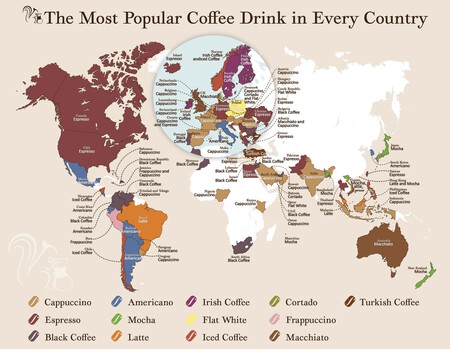
A recent analysis by Coffeness highlights the most popular coffee preparations worldwide. Among the fascinating insights is the Cappuccino , which reigns supreme as the favorite in 24 countries , including Spain and much of Europe. Its creamy texture and frothy top have made it a universal hit, especially in espresso-loving regions.
In contrast, the Espresso is the second most popular coffee choice, favored by 14 nations such as the United States and Germany. This concentrated coffee preparation has sparked great enthusiasm, especially with the advent of affordable machines that cater to coffee enthusiasts. Despite its strong flavor, the rising popularity of espresso continues to challenge traditional preferences.
For Spaniards, however, an espresso can be a tricky choice. If ordered from an establishment lacking specialty coffee, the result may be a torrefact coffee — bitter and overly roasted, requiring substantial sugar to mask its unpleasant taste. Specialty variations, however, offer a much more palatable experience.
Regional Coffee Delights
Surprisingly, filter coffee , despite its popularity in American culture, comes in third place globally, with its acclaim in 12 countries , including South Africa and the United Arab Emirates. One of the quirkiest takeaways from this map is Italy, a nation renowned for its coffee heritage. They may not typically consume the espresso many associate with them. Instead, the American coffee — brewed by diluting espresso with water — actually dominates Italian preferences.
Cultural Significance and Local Favorites
Italy’s connection to coffee doesn’t stop there; drinks like Turkish coffee are integral to cultural identities worldwide. Turkish coffee holds the title of Intangible Cultural Heritage of Humanity , cherished for its unique preparation and strong flavor. Other regional delights include Irish coffee renowned in Ireland, and Espresso Macchiato , a beloved choice in Australia and the UK.
Moreover, it’s essential to recognize the growing influence of the coffee market in China . From virtually no presence a few years ago, coffee has gained significant traction, leading to an influx of coffee shops in major cities. This boom signifies a shift in cultural preferences and even impacts corporate strategies to attract foreign workers.
Interpreting the Data: The Challenges of Global Trends
While the insights from Coffeness are intriguing, we must note that they are based on search data analysis from Google rather than rigorous scientific studies. Therefore, while the findings align with common expectations, they should be viewed with caution. Countries like China pose data collection challenges, and the absence of definitive data makes it difficult to draw conclusive interpretations.
Despite these limitations, the results reflect the rich diversity of coffee preferences worldwide, showcasing why the Cappuccino remains the beloved choice for many.
Images | Alet123Coffeness
In Xataka | How much does a cup of coffee in each country cost, explained in a fantastic map