
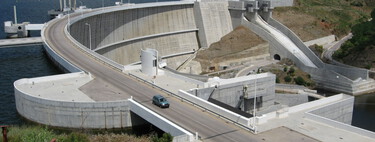
The Colossal Cinturão das Águas: A Game-Changer for Water Management in Ceará
In modern engineering, one of the most effective solutions to combating drought involves transferring water from areas of surplus to regions experiencing water scarcity. However, when these regions are separated by the arid Sertão of Brazil, the effort transforms into a monumental task. This is where the ambitious Cinturão das Águas do Ceará (CAC) comes into play, drawing attention both nationally and internationally.
Understanding the Cinturão das Águas
Often referred to as an artificial river, the Cinturão das Águas is actually a sophisticated canal system that operates primarily through gravitational flow. Currently nearing 91% completion, its purpose is monumental: to ensure water access for over five million residents in one of South America’s most water-stressed areas.
The Magnitude of the Project
Not simply a newly conceived initiative, the Cinturão das Águas is the final and critical segment of the larger São Francisco River integration project, the most extensive water infrastructure undertaking in Brazil. The design incorporates a northern axis that begins at the Jati Dam, utilizing 145.3 km of canals to traverse the Cariri region.
Operational Mechanism
The innovative aspect of the CAC lies in its gravitational-based system. Unlike other transfer systems that are dependent on continuous pumping—and the elevated energy costs associated with this—the CAC optimizes the natural topography, employing a mix of open canals, tunnels, and siphons to facilitate the flow of water downhill from the Jati Dam to Nova Olinda and beyond.
Nourishing the Watersheds
Although it functions similarly to an artificial river, the Cinturão is fundamentally a transfer canal. Its role is not merely to convey water from point A to B but to also serve as a vital artery for Ceará’s water system. The water flowing through the CAC is designed to recharge surrounding hydrographic basins, including major reservoirs like the Castanhão and Orós, ensuring a dynamic flow rather than stagnation.
Significant Impacts
This infrastructure is expected to directly supply 561,000 residents across 24 municipalities, with the potential to indirectly benefit over five million more by connecting with various water systems. Authorities are keen on prioritizing human consumption to avert chronic shortages in cities prone to drought, paving the way for revitalized industry and irrigated agriculture, crucial drivers for these economically challenged regions.
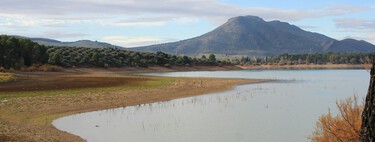
A Lifesaver on the Horizon
As we approach the end of 2025, the project has accelerated its progress, especially given forecasts for upcoming drought cycles threatening the region. The encouraging news is that tests reveal the infrastructure is functioning well.
In short, while global discussions on water management intensify in the 21st century, Brazil is close to unveiling one of the continent’s most significant open-air water systems. If all goes according to plan, water from the São Francisco will have a direct and safe conduit to the heart of Ceará by June 2026.
Images | SRH