
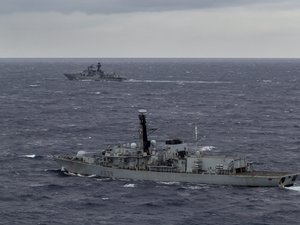
This Wednesday, October 22, the British Navy and the North Atlantic Alliance teamed up to track and intercept a Russian destroyer sailing in British waters.
This Wednesday, October 22, 2025, HMS Duncan, a British Navy destroyer , was deployed at sea by NATO Maritime Command as part of an operation to follow up on the Russian destroyer Kulakov . The Royal Navy reported that, “This is the first time that a Royal Navy warship has been tasked, under direct Alliance command, with such an operation.” This significant deployment indicates a shift in the dynamics of maritime operations and underscores the ongoing tensions in European naval territories.
The British destroyer utilized its advanced sensors and systems to successfully intercept the Kulakov in the North Sea . It was actively monitoring the passage of the Russian warship, which was believed to be heading westward across the English Channel towards the island of Ouessant, off the coast of France . The Royal Navy’s engagement in tracking the Kulakov exemplifies the growing concerns about Russian naval activity in the region.
An Operation Carried Out in 3 Countries
For this crucial tracking and interception operation, three European nations collaborated seamlessly. HMS Duncan was supported by a Wildcat military helicopter and an NH90 helicopter belonging to the Dutch Air Force and the French Navy , respectively. This emphasizes the importance of multinational cooperation in ensuring maritime security.
“The close coordination between British, French, and Dutch forces demonstrates the strength of our alliance and our ability to respond collectively to any activity in our region,” assured the commander of HMS Duncan. This joint effort not only bolsters the response capabilities of the NATO alliance but also serves to send a clear message regarding solidarity in the face of regional threats.
The presence of the Russian warship in British waters is significant, as the intent behind the Kulakov’s movements remains unclear. This appearance on radar echoes the previous sightings of the Russian submarine Novorossiysk , which was spotted off the French coast between late September and early October. Such maritime maneuvers are viewed with suspicion as geopolitical tensions continue to escalate in the region.
In recent years, Russian naval activities have increased, with reports of Russian ships often following the movements of Western military vessels. This particular interception operation not only highlights the vigilance of NATO forces but also points to the need for enhanced surveillance and response strategies in the face of potential threats. Nations involved in this operation have reiterated their commitment to maintaining peace and security in the North Atlantic , further emphasizing the necessity of sustained military readiness.
Furthermore, the significance of NATO’s maritime operations extends beyond mere interception. They embody a strategic response to the evolving military landscape in Europe, where nations must be prepared to address multiple threats, not only from conventional forces but also from cyber and hybrid warfare that could accompany naval operations. This continued collaboration amongst allies serves to strengthen defenses and bolster communication channels among participating countries.
As the world grapples with instability and the persistent threat of conflict, ensuring maritime security is a priority for NATO. The involvement of the Royal Navy , along with its European partners, reinforces the commitment to a collective defense strategy that prioritizes peace and security. Measures like these highlight the compelling need for nations to adapt quickly to changing global dynamics while maintaining readiness against any potential aggression.
The Royal Navy , along with its NATO allies, remains steadfast in its resolve to safeguard maritime routes and protect national interests. The operation represents not just an immediate response but also a long-term strategy aimed at enhancing defensive capabilities in the face of persistent and evolving threats. By maintaining a robust military presence and establishing clear lines of communication, these nations are ensuring that their security frameworks evolve alongside the changing geopolitical landscape.
The recent operations of HMS Duncan and the collaborative efforts with NATO partners highlight a commitment to collective security in the face of emerging threats. As global tensions continue to rise, nations must remain vigilant, forging ties and sharing intelligence to effectively navigate the complexities of modern warfare and ensure the safety of their waters and territories.