
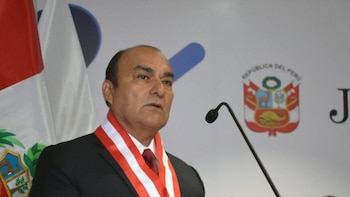
The Controversy Surrounding Gino Ríos
The recent reinstatement of Patricia Benavides as the Nation’s Prosecutor continues to be a point of debate within Peru’s judicial system. Compounding the tensions is a criminal complaint against the president of the National Justice Board (JNJ) , Gino Ríos . The accusation is based on the alleged crime of illegal appropriation of an ongoing process , a charge considered serious enough to warrant up to two years in prison and disqualification from holding public office .
The core of this controversy lies in the decision Ríos made on June 12 when, in his capacity as president of the JNJ, he single-handedly issued Resolution No. 231-2025-JNJ . This document mandates the reinstatement of Benavides to her role as the Nation’s Prosecutor, despite the fact that the related case is still under evaluation in the Judicial Power through an amparo process . The individual behind the complaint, identified as Javier Adrianzén , argues that this decision violates the Constitution, as no official should intervene or make determinations regarding judicial processes that are currently ongoing.
According to the document obtained by Infobae Perú , the National Justice Board’s powers are limited strictly to the appointment of Supreme Prosecutors and do not extend to reinstatings such as that of the Nation’s Prosecutor, which should be determined by an internal election of the Supreme Prosecutors’ Board. Thus, the complainant insists that Ríos acted in disregard of existing regulations and exceeded legal functions.
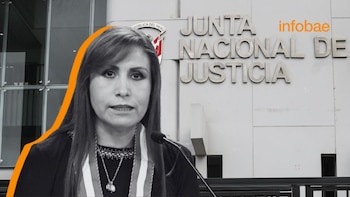
It is noteworthy that at the time the JNJ made its ruling, there was still an unresolved process regarding the leadership of the prosecutor’s office due to the amparo lawsuit filed by Benavides herself. This case is documented under file No. 6870-2024-0-1801-JR-DC-10 , currently being handled by the Tenth Constitutional Court of Lima . The litigation remains ongoing, as the latest judicial ruling, dated April 8, 2025, invalidated a previous verdict and instructed a new one, leaving the debate very much alive.
“ Gino Ríos is not illiterate. He holds a doctorate in law and as the highest representative of the JNJ, he knows his institution is involved in an ongoing amparo process before the Tenth Constitutional Court of Lima. […] He disregarded Article 139°, Clause 2) of the Constitution and issued a ruling despite an amparo process being in progress, which constitutes the illegal appropriation of an ongoing process, as defined in Article 410° of the Penal Code . I request your office to open a preliminary investigation—especially since in Peru, no one is above the law, whether to reward or punish,” the document states.
In an interview with RPP , Francisco Távara , a member of the JNJ, broke his silence and disclosed that he had warned the head of the agency that the case was already being judicialized. He even stated that this was why he excused himself from voting.
“I spoke to him and said, ‘President (referring to Gino Ríos Patio), I am concerned about this issue. We don’t know what it’s about, I don’t have even a copy of the document or resolution that grants speaking rights.’ We exchanged words, and he told me he also didn’t know the document… then I said I would excuse myself in writing. […] I indicated that, based on what I had researched, it had the status of a decided matter and argued that this could not be discussed,” he expressed.
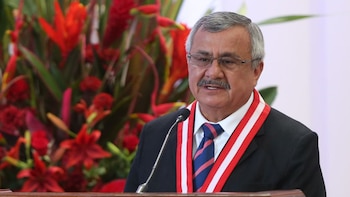
He criticized the rapidity with which a definitive ruling was reached, emphasizing that such a sensitive issue, due to its impact on the integrity of the Public Ministry, deserved a more measured analysis . He also asserted that, had he participated in the vote, his decision would have leaned towards rejection.
“If I had participated and had to vote on this delicate matter, my vote would have corresponded to the communication I was sending, especially to state: I cannot declare nullity here because it is judicialized, first and foremost ,” he expressed.