
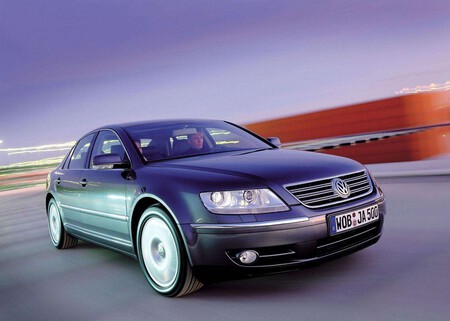
The Rise and Fall of the Volkswagen Phaeton: A Lesson in Automotive Ambition
The automotive industry has always been characterized by intense competition and a tendency to cling to established norms. In recent years, this reality has been exemplified by the rise of the electric vehicles (EVs), with Tesla leading the way in reshaping consumer expectations. However, the electric car market is crowded, particularly as Chinese manufacturers aim to establish a foothold in Europe. Interestingly, while many brands are exploring the future of electric mobility, some, like Volkswagen, seem to be echoing the past, introducing models that still rely on traditional combustion engines. Among these historical ventures, the Volkswagen Phaeton serves as a powerful case study.
Volkswagen aimed to establish itself in the luxury sedan market with the Phaeton, which is often referred to as “The Bentley of the People.” Launched in 2002, the Phaeton was designed to compete with the Mercedes S-Class, BMW 7 Series, and Audi A8. By positioning itself in this upscale segment, Volkswagen sought to elevate its brand perception and enter a market typically dominated by established luxury automakers.
In pursuing this ambitious strategy, Volkswagen invested heavily in the Phaeton’s development—estimates suggest up to €2 billion was spent. This financial commitment included the construction of the Dresden factory, known for its avant-garde glass architecture and state-of-the-art manufacturing processes. Despite this substantial effort, the Phaeton struggled in the marketplace.
Winning over consumers in the luxury segment is challenging. Many brands, including Hyundai and Kia, took decades to build their reputations. The Phaeton’s struggle illustrates this reality; despite its impressive features and luxurious interior, it could not overcome the market’s skepticism regarding a luxury Volkswagen.
Technical Complexity and Expectations
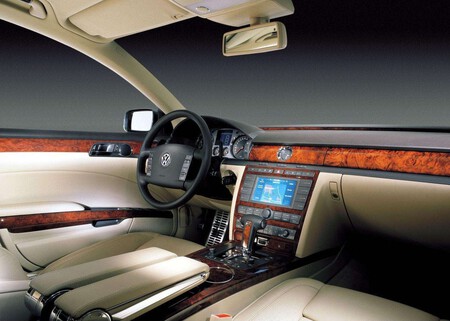
The Phaeton was equipped with an array of impressive features, from V6 engines to the powerful W12 engine, boasting 450 horsepower. Standard luxury amenities included leather seating with heating and massage functions, four-zone climate control, and advanced safety features. Despite these advancements, the Phaeton’s complexity contributed to its downfall.
Phaeton owners reported myriad issues, particularly with the V10 TDI engine, known for its reliability problems. Difficulties with turbo systems, distribution, and electrical components plagued the model, leading to costly repairs. The pneumatic suspension, while offering superior ride comfort, similarly faced issues that made ownership less appealing.
Market Performance
Volkswagen had high expectations for the Phaeton, targeting 20,000 units sold annually. However, those predictions quickly proved overly ambitious. In total, during its 15 years on the market, only 84,253 units were sold—far below internal forecasts, leading to an average loss of €28,101 for each vehicle sold. This performance stands in stark contrast to competitors like Mercedes-Benz, which sold over 170,000 units of its S-Class in 2023 alone.
The Phaeton’s failure underlines the reality that luxury car purchases are often driven by brand reputation and consumer perception rather than just technical specifications or price points. As a result, many consumers hesitated to invest in an expensive Volkswagen, even if the car met all luxury criteria.
Lessons Learned
The story of the Volkswagen Phaeton serves as a cautionary tale. The combination of a heavy financial investment, ambitious market positioning, and complexity in engineering ultimately proved to be a recipe for failure. Despite the car’s quality and features, commitment to the notion of Volkswagen as a luxury brand fell short in consumer recognition.
Current trends suggest that automakers must adapt quickly to changing consumer preferences, particularly as the industry shifts toward electric vehicles. The experience of the Phaeton serves as a reminder that building a luxury brand within the automotive market requires a delicate balance of innovation, consumer perception, and sustained commitment.
The legacy of the Phaeton may not resonate well with VW’s brand history, but it stands as a testament to the challenges faced in the fiercely competitive automotive landscape. Today’s manufacturers could learn valuable lessons from this ambitious yet flawed endeavor, emphasizing that understanding market dynamics is as crucial as technological advancements in driving success.
By reflecting on the rise and fall of this important model, we can better grasp the complexities of the automotive world, especially as it transitions into an electric future.