

The Shifting Strategy of U.S. Military Presence in the Caribbean
The recent intensification of U.S. military activities in the southern Caribbean has raised eyebrows across the globe. Initially framed as a response to drug trafficking , the substantial build-up of troops and artillery suggests a shift towards a strategy focused on coercion . This transformation appears aimed at accelerating the eviction of the Venezuelan regime without the need for a formal invasion. The situation is characterized by a blend of visible deterrence and opportune surgical options. At its core lies Venezuela, a nation under increasing pressure.
Evolution of Objectives
As reported last week, the U.S. military deployment commenced under the guise of combatting drug trafficking, engaging in actions against speedboats and activating bases based on technical pretexts. However, the evident build-up of military resources—including B-52 bombers near Venezuelan airspace and special operations helicopters conducting training off the coast—has raised questions about its true intention. The veiled messaging points less towards a mission against drug routes and more towards a desire to overthrow the Venezuelan regime.
The shift in strategy has been profound, with heightened public rhetoric calling for the ousting of Venezuelan President Nicolás Maduro and a more aggressive military posture. The deliberate alignment of military deployments with a focus on destabilizing the regime indicates a desire for collapse rather than mere containment.
Artillery as Pressure
Recent reports from major news outlets highlight the exponential growth of U.S. military presence in the region. Thousands of soldiers have been deployed alongside the USS Iwo Jima , multiple destroyers, and advanced military hardware, including F-35 fighter jets and UAVs. This overwhelming show of force appears to be disproportionate for simply targeting drug boats, indicating a strategic calibrated pressure aimed at key command and operational nodes within Venezuela.
According to military analysts, this military might strikes a precarious balance: it’s excessive for counter-drug operations yet insufficient for an outright occupation. This enables Washington to exert pressure while maintaining a covert escalation vector, creating a situation that invites miscalculation at any moment.
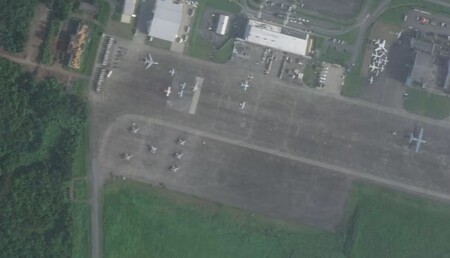
One of the satellite images captured on October 17 showing F-35 fighter jets at the José Aponte de la Torre Airport in Puerto Rico
The Mystery of Venezuela
Despite the ongoing erosion of the Venezuelan Armed Forces due to maintenance and logistical challenges , they are not entirely without teeth. Venezuela possesses S-300 anti-aircraft systems and a millitia network significant enough to raise concerns regarding potential repercussions for U.S. actions. Furthermore, internal instability within the Venezuelan military, underscored by purges and changing loyalties, heightens its vulnerability and forecasts an uncertain future.
Colombia and Broader Context
The deteriorating relationship between the U.S. and Colombia adds another layer to this intricate geopolitical scenario. Trump’s derogatory remarks about Colombian President Gustavo Petro, coupled with threats to cut funding and retaliatory measures following a naval incident, underscore the fragility of U.S. alliances. This shift undermines the previously strong intelligence-sharing capabilities with Colombia, raising concerns just as U.S. military options in Venezuela approach a pivotal threshold.
The Political Window
As the crisis unfolds, the Trump administration is racing against time. This militaristic posture, while potent, cannot be maintained indefinitely without risking unplanned escalation. The emphasis appears to focus on achieving a decisive result that Trump can tout as a victory, rather than adhering to democratic norms and criteria for governance in Venezuela. Analysts warn that this could lead to unintended consequences and a potential power vacuum, complicating the situation further.
Strategic Test
In summary, the current situation illustrates a complex interplay of military deployment, strategic threats, and diplomatic maneuvering. The lack of a formal ultimatum creates a tense environment where U.S. objectives hinge more on the potential fractures within the Venezuelan government than on military might alone. The clock is ticking, and as military pressure mounts, it remains to be seen how long national resilience can endure amid such significant external challenges.
In essence, the Caribbean is now a focal point for a broader struggle where the stakes are diplomatic, strategic, and humanitarian, bringing the region closer to an uncertain and potentially explosive confrontation.