
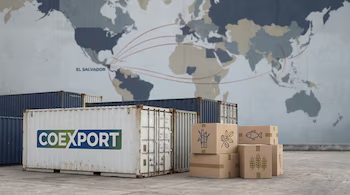
Operational Risks for El Salvador’s Exporters Amid New U.S. Tariffs
Background on Tariff Changes
El Salvador recently dodged a significant economic hurdle by avoiding the newly implemented 12.5% tariff instituted by the United States, which affects 60 countries. However, this reprieve does not mean that Salvadoran exporters are free from operational risks. The Exporters Corporation of El Salvador (Coexport) emphasized the critical importance of correct product classification within the U.S. customs system, warning that errors could lead to higher charges than necessary.
Recommendations from Coexport
To navigate these turbulent waters, Coexport issued vital recommendations for exporters regarding the recent tariff changes. The temporary 10% tariff, which has now transitioned to a more permanent status, was implemented following U.S. investigations into goods associated with forced labor. Countries showing inadequate labor compliance will be subject to the higher tariff, leaving El Salvador in a relatively favorable position due to the trade agreement established in 2026.
Understanding Customs Operations
The actual risk for Salvadoran exporters lies not in the tariff rate itself, which remains at 10% for most products, but in customs operations. Coexport has explicitly pointed out that if either the U.S. importer or customs agent neglects to declare the correct product code under Chapter 99 of the HTSUS tariff system, the system may default to a higher rate. Therefore, it is crucial for exporters to verify this step with their U.S. importers prior to shipping.
The Importance of Product Classification
Furthermore, Coexport recommends a thorough review of the tariff classification for all products to ensure they align with the current lists of exclusions. The U.S. Trade Representative (USTR) maintains the discretion to update these lists, requiring exporters to keep abreast of any changes.
Contractual Agreements and Cost Responsibilities
In addition to classification, Coexport stresses the importance of reviewing commercial contracts and Incoterms. These terms will clarify the responsibilities regarding extra tariffs that may arise, ensuring that the costs are absorbed by the correct party — either the Salvadoran exporter or the U.S. importer. Proper documentation proving the origin of goods and compliance with labor standards is essential, as U.S. customs may demand such paperwork.
Competitive Advantage Amid Global Tariffs
The new tariffs also impact various global economies, including Canada, the United Kingdom, and multiple nations in the European Union. While these markets face increased costs, Salvadoran exporters may benefit, provided they can maintain effective customs documentation and classification procedures.
Conclusion
The complexities of international trade, especially amid fluctuating tariffs, call for meticulous attention to detail from Salvadoran exporters. With the right precautions, El Salvador can leverage its competitive position in the global market, avoiding pitfalls while maximizing its trade potential. Monitoring regulations and compliance will be vital in ensuring a smooth operational flow in these revised tariff conditions.