
Guyana: The All-Star of Food Self-Sufficiency
Throughout history, humanity has largely consumed foods produced locally, often relying on the resources readily available in their surroundings. However, the advent of globalization and the relentless increase in population have transformed food consumption patterns dramatically. This shift has often led to a reliance on imports to meet the demands of diverse diets. Amidst this global trend, one country shines as a beacon of self-sufficiency —Guyana.
Food Production in Guyana: Meeting Every Need
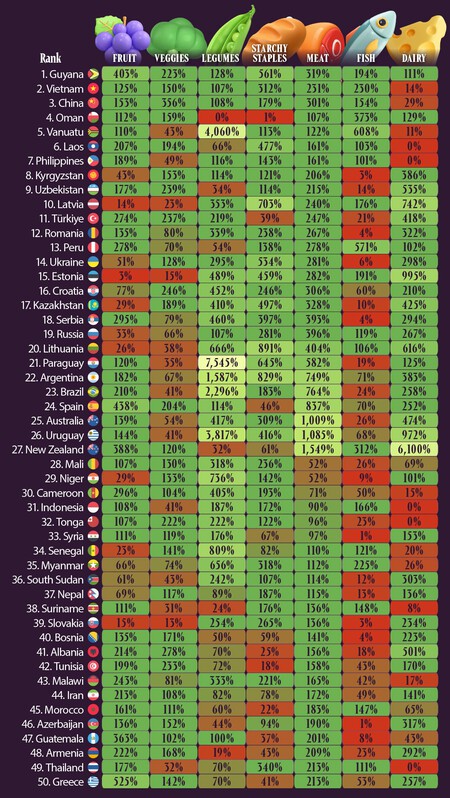
According to a graph by Visual Capitalist, Guyana ranks as the only country in the world that not only meets but exceeds the production demand across seven crucial food groups. These categories include:
- Fruits
- Vegetables
- Legumes
- Starchy foods (like flour and rice)
- Meat
- Fish
- Dairy
Guyana is a small nation situated in northern South America, with a population of approximately 815,000 . In recent years, Guyana has experienced a dramatic increase in its GDP, partly due to the discovery of significant oil reserves in 2015. Prior to this oil boom, however, the country’s agricultural and mining sectors were already key contributors to its economic prosperity.
Self-Sufficiency Versus Dependence
Guyana stands on the podium as the sole country that maintains complete self-sufficiency across all seven food groups. Following closely are Vietnam and China , which meet demands in six out of the seven categories. Their robust meat and fish production contribute significantly to their food security, though in China’s case, this is often offset by unsustainable practices.
A common challenge in many Asian countries is dairy production. Nations such as Indonesia , Thailand , Tonga , Laos , and the Philippines derive 0% of their dairy consumption from local sources, demonstrating a heavy reliance on imports. This dependency highlights the importance of agricultural policies that support local farming and reduce food import needs.
Countries Struggling with Food Production
On the lower end of food self-sufficiency, countries like Armenia , Thailand , and Greece only produce enough food to meet four categories. Even within these limited categories, production levels are often insufficient, making them reliant on imports for staples such as dairy and vegetables.

European Context: A Mixed Bag
When examining the food self-sufficiency of European Union (EU) member countries, it is evident that some excel while others lag behind. In Northern Europe, for example, fruit cultivation does not thrive as it does in southern regions. The EU’s Single Market Agricultural Policy allows for the free circulation of food products among member countries without any regulatory tariffs. Over 70% of food products within the EU are exchanged among member nations, ensuring supply stability even during local production challenges.
What we see in Guyana is not merely a statistical anomaly; it is a model of how a nation can maintain food independence through effective agricultural practices and resource management. As climate change and global disruptions impact food supply chains, Guyana serves as a relevant illustration for nations grappling with food security issues. While Guyana enjoys the fruits of successful self-sufficiency, the global community can take valuable lessons from its agricultural policies to inspire sustainable practices worldwide.