
The Airbus A380: A Marvel of Modern Aviation
The Airbus A380 is currently the largest passenger plane in the world, capable of transporting a staggering 853 passengers in its ultimate configuration. While it holds the title as a titan of the skies, it finds itself overshadowed only by the Antonov An-225 , which, unfortunately, was destroyed during the Ukraine War. Despite its impressive capacity and engineering prowess, the A380 faces significant challenges related to reliability and maintenance.
A Complex Machine
To grasp the complexity of the Airbus A380, one must consider its construction. Comprising four million individual components sourced from 1,500 companies across 30 countries , this giant is no simple feat of engineering. With 19,000 screws holding together the three main fuselage sections, plus an additional 4,000 screws for the wings, the sheer amount of work to keep this aircraft in the air is staggering. Beyond just structural parts, the A380 features 220 windows , 16 doors , and its exterior paint alone weighs 531 kilos .
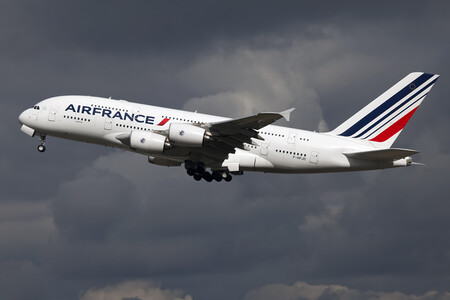
Airbus A380 of Air France | Image: Maarten Visser with license CC by-SA 2.0
The Problems Arising
Despite its remarkable capabilities, the Airbus A380 has garnered a reputation for frequent failures . According to data from Bloomberg , the European Union Aviation Safety Agency has issued 95 directives regarding the A380 since its inaugural flight in 2005 . This represents double the warnings issued for Boeing’s comparable models, including the 787 , 777 , and 747 . The most notable issues include landing gear axis failures and cracked evacuation ramps . Some of these complications arose during the pandemic when planes were stored for extended periods.
These directives serve as mandatory corrections , inspections, or modifications that airlines must comply with to ensure the safety of passengers. Failing to adhere to these guidelines can result in serious penalties, including grounding the aircraft altogether.
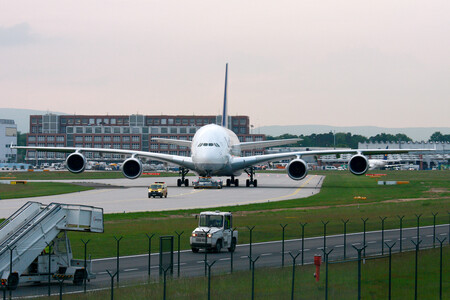
Lufthansa’s first Airbus A380 | Image: WO St 01 With license CC By-SA 3.0
To Keep or Not To Keep
As of now, the Airbus A380 has reached 20 years of service. Typically, commercial aircraft are phased out between 25 and 30 years . This poses a unique dilemma: the A380 is too young to retire yet may be considered too old to sustain operationally. Compounding the issue, alternatives are lacking:
- Manufacturing of the A380 ceased in 2021 , leaving airlines that require high-capacity aircraft with limited choices.
- Airbus faces production limitations with the A350, the next largest option in their lineup, primarily due to supply chain disruptions that persist from the pandemic.
- Boeing’s 777X has encountered significant delays , with first deliveries not anticipated until 2026 .
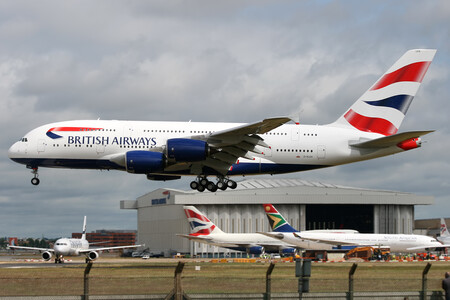
Image | KRZYSZTOF KACZALA WITH CC BY-SA 3.0 License
A Bottomless Well of Maintenance
The ongoing maintenance of the A380 is increasingly becoming a ‘ bottomless well ‘ of expenses for airlines. Routine inspections and repairs require over 60,000 work hours , creating strains not only on time but also on valuable facility space, which is often limited. Each malfunction not only incurs repair costs but also impacts flight schedules and passenger arrangements, amplifying overall expenses.
Despite these hurdles, Airbus is committed to providing technical support for A380 operators. The organization assures that it will assist airlines in optimizing their fleet operations, as long as the aircraft remains in service.
The Largest Fleet
Among all airlines, Emirates operates the most Airbus A380s, with 116 aircraft , though 21 units are currently grounded. The airline plans to continue using A380s at least until the end of the next decade due to their substantial investment and capacity. Singapore Airlines and British Airways each operate 12 A380s , while other carriers like Qantas , Lufthansa , and Qatar Airways are expected to transition to A350 replacements in the upcoming decade.
In conclusion, the Airbus A380 stands as a testament to aviation engineering excellence. However, it is currently embroiled in numerous challenges that could complicate its future in commercial aviation. The balance between operational demands and reliability remains a crucial aspect for airlines as they navigate the complexities of maintaining this behemoth.
Cover image | N509FZ licensed CC by-SA 4.0