
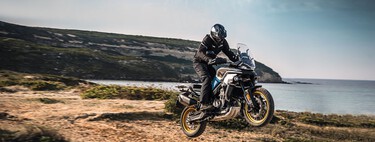
Before revolutionizing the world of two-wheeled transport, Soichiro Honda was just a young man from Japan in the late 1930s, deeply fascinated by engines. He spent countless hours in his workshop, striving to enhance motor parts and dreaming up designs that he believed could change the industry. His most cherished creation was a motor piston crafted from parts of an old radio, which he insisted could significantly improve engine performance.
As our partners at Motorpasion motorcycle reports, Toyota had already established itself as the largest Japanese engine manufacturer. Driven by ambition, Honda took his piston to Toyota, hoping they would offer him a job.
However, things did not unfold as he had imagined. Honda recounted a pivotal moment in an interview, saying, “I took my pistons to Toyota, filled with youthful zeal. But instead of encouragement, they laughed at me, saying, ‘This does not meet our standards.’
Years later, Honda would reflect on this experience with a notable phrase: “They rejected me at Toyota… so I founded Honda.” Instead of succumbing to discouragement, the rejection became a catalyst, fueling his determination to carve his own path in the industry.
“I grab my dreams with these hands”
After that rejection, Honda didn’t wallow in despair. “I returned to my workshop with a broken heart, but not empty,” he recalled. In a remarkable show of commitment, he sold his wife’s jewelry to support his dream of manufacturing a prototype and altering the transport landscape. He worked tirelessly, often admitting, “I worked until my hands bled.”
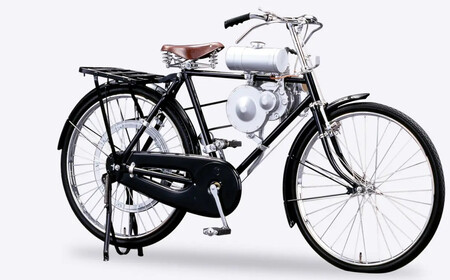
However, fate continued to deal him blows. During World War II, his burgeoning factory was decimated by bombings, only to be ravaged again by an earthquake. Yet, Honda persevered. He sold the remnants of his factory to Toyota, using the funds to establish the Honda Technical Research Institute in 1946.
According to Motorcycling, the post-war devastation left Japan in ruins, with countless individuals needing affordable and convenient transportation. Honda envisioned a simple solution: If there were surplus engines available, why not attach one to a bicycle? This led to the creation of motorized bicycles . Although they weren’t the fastest or most visually stunning, they effectively transported thousands who had no other means. Honda reflected, “It wasn’t glamorous, but it worked. My failures ceased to be an enemy and became my fuel.”
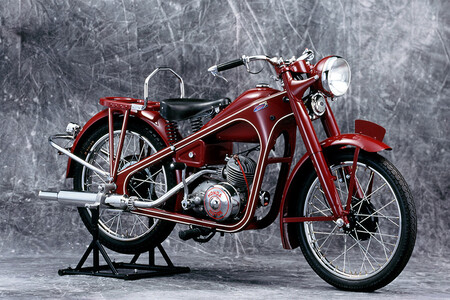
Honda Dream Type D
In 1948, Honda partnered with Takeo Fujisawa, an entrepreneur whose vision complemented Honda’s ambition. By 1949, they launched their first motorcycle, the Dream Type D, which featured a 98 cc two-stroke engine. Simple yet effective, it was designed for everyday use. Reflecting on its simplicity, Honda stated, “I took an engine, mounted it on a bicycle, and something new came to life.” This approach to problem-solving became the hallmark of Honda’s innovative legacy.
The (first) best-selling motorcycle on the planet
By 1958, Honda had solidified its reputation as a manufacturer of engines and was assembling them into a small motorcycle that was poised for commercial success: the Honda Super Cub . This model became an unprecedented success, with over 110 million units sold worldwide, making it the best-selling motorcycle in history.
The following year, Honda motorcycles made their appearance in the US and rapidly expanded globally. Today, Honda operates in over 160 countries, producing motorcycles across 35 factories worldwide. By 2025, they aim to surpass 500 million motorcycles produced in total.
Honda’s philosophy has always reflected resilience: “Do you know how success is achieved? It involves falling so many times that you already know how to get up even before touching the ground.” All this stemmed from what might have been viewed as a setback in his journey, ultimately leading him to monumental success.
In Xataka, we see how the world has shifted significantly with the rise of SUVs and electric cars. The Honda Prelude serves as a reminder that innovation is often about revisiting the fundamentals of engineering and design.
Image | Sling