
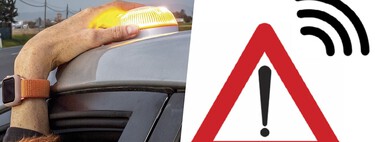
Understanding the V-27 Signal: An Essential Safety Feature
Much has been said about the V-16 beacon, which the Directorate-General for Traffic (DGT) will soon make mandatory. From its origins to the business dealings behind it, discussions have surfaced regarding its legality and effectiveness. The most prominent concern, however, revolves around its visibility and practical utility.
The Concerns Over Visibility
Experts have raised alarms about the limited visibility of the V-16 beacon, noting that its light may not be sufficient in certain conditions. Publications like Xataka have echoed doubts about whether dispensing with traditional warning triangles is advisable. This is particularly concerning on secondary roads, especially where there are changes in gradient, making visibility challenging.
Introducing the V-27 Signal
In light of these concerns, the V-27 signal is introduced as a supplemental warning system. When a connected V-16 beacon is activated, it sends the vehicle’s position to the DGT within 100 seconds via Internet of Things (IoT) technology. This information helps authorities locate incidents quickly.
A Notice in Exchange for the Triangles
Once the DGT registers an incident, it activates warnings on nearby light panels – a system that’s primarily effective on highways. However, the lack of such panels on secondary roads raises questions about its utility. In such cases, the DGT replaces this with the V-27 signal as an alternative warning.

The Design and Functionality of the V-27 Signal
The V-27 signal features a triangular shape with an exclamation mark and connectivity stripes. This signal activates on the vehicle’s instrument panel to alert drivers of potential danger. Interestingly, the DGT can also trigger it for other emergencies, not just during beacon activation.
As stipulated in the Royal Decree, this voluntary signal will only be displayed in cars connected to the DGT’s mobility information system, ensuring that not all vehicles will receive it.
The Usefulness of the V-27 Signal
Is the V-27 signal beneficial? Absolutely. It allows drivers to receive timely information about surrounding hazards. While highways provide ample opportunity to notice alerts on illuminated panels, secondary roads lack this feature, making the V-27 signal a valuable tool for early warning of accidents or breakdowns.

Requirements for Activation
However, it’s crucial to note that to benefit from the V-27 signal, a driver must have a connected vehicle registered with the National Access Point for Traffic and Mobility Information. Without this, the utility of the signal diminishes significantly.
In summary, while the V-16 beacon brings challenges concerning visibility, the introduction of the V-27 signal provides a promising complement for half of road users, marking a significant step toward improved road safety.
Photo credits: Andri Klopfenstein and DGT.