
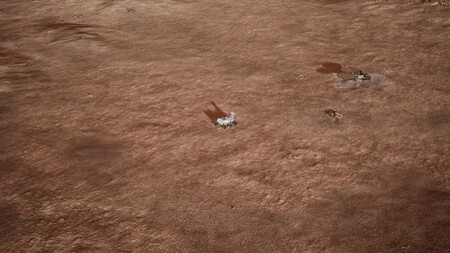
Since February 2021, the Rover Perseverance has been diligently exploring the Jezero crater , an ancient river basin on the surface of Mars . The primary goal of this NASA robot is to find signs of past life. This mission is not just another exploratory venture but, according to NASA, a crucial part of an ambitious plan to return intact samples from another planet to Earth. The implications of these findings could alter our understanding of life beyond our own planet.
For over three years, Perseverance has been hard at work, collecting diverse rock fragments and Martian dust, carefully stowing these samples in small sealed tubes either on the Martian surface or within the Rover itself. From a bird’s eye view, these tubes could be imagined as breadcrumbs leading through a desolate desert landscape, waiting to be collected in the name of science.
A Truncated Promise
The plan, known as Mars Sample Return, initially envisioned sending another spacecraft to Mars, which would launch a rocket from the Martian surface to return these precious samples back to Earth. However, the project has encountered significant hurdles. An independent review suggested that costs could soar to an astonishing 11,000 million dollars, pushing the timeline for sample return to as late as 2040.
In May, the new U.S. administration presented its first budget draft, proposing a 24% cut to NASA’s financing and recommending the cancellation of the Mars Sample Return mission due to its exorbitant costs. While the plan must still navigate Congress, the direction is clear. Prioritization is shifting towards manned deep space missions, such as the Artemis program, while large-budget projects with uncertain returns are being placed on hold.
Faced with budget cuts and an uncertain future, NASA has begun reevaluating its plans. As explained by former administrator Bill Nelson, two alternative approaches are being considered: one would utilize a “ Sky Crane ” landing system, like those successfully employed in the Curiosity and Perseverance Rover missions. The second approach would explore innovative proposals from the private sector.
Lockheed Martin’s Letter
Amid the uncertain funding landscape, Lockheed Martin , a leading aerospace contractor in the U.S., has taken action. With over fifty years of experience conducting Mars missions, Lockheed has presented NASA with a proposal to execute the Mars Return mission using a dramatically different and more economical approach, estimated at less than 3,000 million dollars. This comes with a fixed-price contract, ensuring that costs will not exceed the agreed budget.

This shift in strategy represents a significant departure from the traditional, complex, and risk-laden project structures that often involve multiple government stakeholders. Lockheed’s proposal includes a compact landing module inspired by the InSight lander that successfully landed in 2018, a lightweight vehicle designed to be the first to launch from another planet, and a re-entry system derived from previous missions such as Genesis, Stardust, and Osiris-Rex.
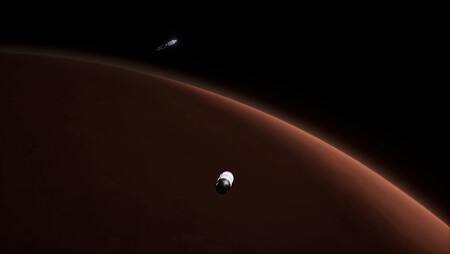
This innovative proposal by Lockheed Martin goes beyond engineering. By adopting a “ Firm-Fixed Price ” contract, the company is willing to absorb any potential extra costs. If challenges arise during the mission, the overall expense won’t increase. According to Lockheed, this contract model has proven successful in other deep space scientific endeavors, where they managed to return unspent budgets to NASA.

Lockheed Martin’s message is clear: if NASA wants to safeguard its most ambitious mission without incurring additional costs, the company is prepared to take the lead. Successfully bringing back around thirty small tubes could help answer one of humanity’s most profound questions: Was Mars ever inhabited?
Scientists aren’t seeking fossils or complex structures; rather, they are in search of subtle indications that can only be analyzed with the precision afforded by terrestrial laboratories. The samples collected by Perseverance are not just any rock; they have been meticulously chosen based on their location, age, composition, and geological context. As NASA articulates, these samples are the most likely to contain what could be considered Martian “ biofilms .”

However, the significance of these samples extends beyond the search for life. They have the potential to reveal vital information about how the wet Martian climate was 3.5 billion years ago, how its environment evolved, and why it transitioned to the arid and inhospitable landscape we see today. Furthermore, these samples will inform future manned missions regarding potential landing sites, usable resources, and associated risks.
Images | Lockheed Martin
In conclusion, the mission of the Rover Perseverance and the subsequent plans for sample return signify a remarkable era of exploration and discovery. The collaboration between government and private sectors may well hold the key to answering profound questions about life beyond Earth and the future of human exploration of Mars.