
US Condemns Luca Scalisi: The Financial Architect Behind Del Records and CJNG
Overview of the Case
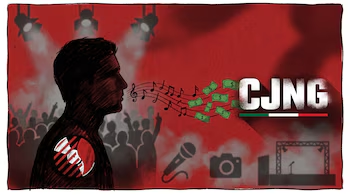
Luca Scalisi, the financial head of Del Records, was sentenced to eight months in federal prison on April 7, 2026, for his involvement in laundering money linked to drug trafficking. His actions violated the Kingpin Law, which prohibits transactions with individuals designated by the U.S. Department of Treasury. This case has raised serious questions about the infiltration of organized crime in the music industry, particularly with connections to the Jalisco New Generation Cartel (CJNG).
Sentencing Details
Judge Maame Ewusi-Mensah Frimpong ordered Scalisi to serve his sentence in a federal facility in Southern California to keep him near his family. Besides imprisonment, he must also undergo three years of supervised release, repay $15,000 in restitution, and pay a special fee of $100. Scalisi originally faced up to ten years in prison but managed to negotiate his sentence by pleading guilty to one charge, leading to a reduction of 13 out of 14 charges.
Background Information on Luca Scalisi
Born in Italy, Scalisi immigrated to the United States as a teenager and settled in Beverly Hills. He began his career managing real estate portfolios and ventured into the entertainment sector through work with notable figures such as Eminem. Over the years, he produced various films and television shows, straddling two very different worlds: entertainment and organized crime.
His official entry into the music industry came when he joined Del Records in 2014, where he argued that his role was limited to the streaming and licensing department. However, as the investigation unfolded, authorities revealed that he was instrumental in laundering money linked to CJNG activities in Mexico.
The Del Records Connection
Founded in 2008 by Ángel del Villar, Del Records became a prominent player in the Mexican regional music scene, representing artists such as Gerardo Ortiz and Luis Coronel. The cartel’s connection came through Jesús Pérez Alvear, who orchestrated events and facilitated the illegal flow of funds from concerts into Del Records bank accounts.
According to U.S. authorities, the profits generated from concerts were laundered, using the music industry to hide the origin of the money. The department’s investigation began in 2003, culminating in including Scalisi as a designated drug trafficker in April 2018.
Outcomes and Repercussions
In court, Scalisi expressed regret through a four-page letter, stating, “I accept full responsibility for the things I did and I am not looking for excuses.” Following Scalisi’s sentencing, Del Villar decided to go to trial instead of negotiating, ultimately facing four years in prison and a $2 million fine.
Meanwhile, Gerardo Ortiz, who testified against Del Villar, was also prosecuted and received three years of supervised release, alongside a $1.5 million fine.
The Broader Implications
This case exemplifies the dangerous intersection of organized crime and the entertainment industry, posing risks not just to those involved but also to the artists who may unwittingly cross paths with crime syndicates. The repercussions extend into the cultural fabric, raising awareness on how such illicit activities can penetrate mainstream entertainment.
As the investigation continues, the focus remains on ensuring accountability within the industry to prevent future occurrences and to safeguard the integrity of the music landscape.