
U.S. Contemplates Ground Troops in Iran: A New Military Strategy
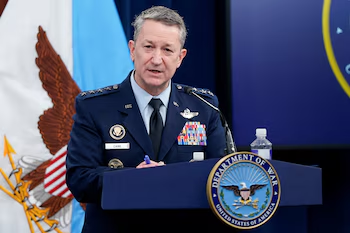
The United States Secretary of Defense, Pete Hegseth, has indicated that the deployment of ground troops in Iran is not off the table. This statement came amid a significant escalation in U.S. military involvement in the region, emphasizing a readiness to act decisively. The Pentagon aims to establish “local air superiority,” preparing for a potentially extended conflict that could last up to six weeks.
The Shift in Military Rhetoric
At a recent press conference, Hegseth refrained from confirming the presence of special operations forces in Iran, stating, “No, but we are not going to enter into the exercise of what we will or will not do.” His declaration that “we will go as far as we need to go” signifies a clear commitment to aggressive military action, distancing the current strategy from past nation-building efforts in Iraq and Afghanistan, which he labeled as “foolish.”
Hegseth asserted that the objective of the current mission—collaborating with Israel—focuses on protecting U.S. and allied interests without engaging in politically motivated wars. The Secretary emphasized, “No stupid rules of engagement, no nation-building quagmire, no democracy-building exercises.” The Trump administration’s new military approach seeks to ensure a swift and decisive outcome, contrasting sharply with the protracted nature of previous conflicts.
Establishing Air Superiority
General Dan Caine, the top U.S. military officer, confirmed that recent air operations have successfully neutralized Iranian defenses. The use of B-2 bombers equipped with 2,000-pound munitions has played a critical role in securing air superiority. Caine stated, “The attacks have resulted in the establishment of local air superiority,” which will allow further operations against Iranian targets.
Despite these advancements, the situation remains volatile. Iranian forces have mobilized their capabilities to strike back at regional energy infrastructures, leading to significant disruptions. QatarEnergy announced a total suspension of liquefied natural gas production following Iranian attacks on their facilities, contributing to a staggering 40% spike in fuel prices across Europe.
Complexities of Modern Warfare
The U.S. military’s actions have not been without complications. Friendly fire incidents have been reported, including a situation where three American F-15E aircraft were mistakenly shot down by Kuwaiti forces, leading to six crew members ejecting safely.
In response to the escalating U.S. military presence, Iranian Secretary of Homeland Security Ali Larijani warned that Iran is well-prepared for a protracted conflict, countering President Donald Trump’s projected timeline for military engagement. Larijani asserted that Iran would fiercely defend its civilization against foreign aggression.
Rising Human and Political Costs
As the conflict intensifies, the human toll continues to grow. Estimates from the Iranian Red Crescent indicate that at least 555 people have died in Iran since the onset of military operations, while Israeli casualties include 11 fatalities resulting from Iranian missile strikes.
International reactions are brewing as tensions escalate. Beijing’s Foreign Minister, Wang Yi, has accused Washington and Tel Aviv of stirring conflict, warning that military superiority could lead to global instability. Simultaneously, U.S. Secretary of State Marco Rubio plans to defend the administration’s military strategy before Congress, setting the stage for further political discourse on America’s role in the unfolding conflict.
Conclusion
The declarations from U.S. officials highlight a significant shift in military strategy towards Iran, prioritizing rapid engagements over diplomacy. As the situation develops, all eyes remain on the implications for regional stability and the potential human costs involved.