
The F-35B Lightning is heralded as one of the most advanced fighters in the world. Renowned for its low observability and multi-role capabilities, this aircraft can take off from short distances and land vertically, making it suitable for operations from both terrestrial bases and aircraft carriers . Its multifaceted operation allows it to conduct air-to-air, air-to-surface, electronic warfare, and intelligence missions simultaneously. Initially, the United Kingdom planned to rely heavily on the F-35B as the cornerstone of its aerial defense, with plans to procure 138 units planned and a service timeline extending until 2069.
However, reality has fallen short of ambitions. A recent report by the National Audit Office (NAO) has documented a myriad of problems plaguing the program, ranging from persistent delays to capabilities that remain unintegrated. Consequently, the operational picture is significantly less robust than initially predicted a decade ago, raising uncomfortable questions surrounding costs, effectiveness, and planning.
F-35B: Promises and Delays
The F-35B Lightning is the short take-off and vertical landing (STOVL) variant touted under the U.S. Joint Strike Fighter program. The United Kingdom selected this model specifically to replace its Harrier aircraft and to operate from Queen Elizabeth-class aircraft carriers. Capable of flying at speeds exceeding Mach 1.6 and reaching altitudes above 50,000 feet, the aircraft is expected to execute various mission types.
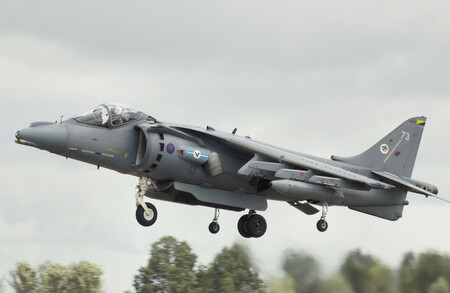
<span>A Harrier plane landing</span>The F-35B’s strength lies in its sensor fusion capabilities, enabling real-time data sharing with other platforms. Unlike older generations, it serves not just as an attack vector but also as a network intelligence node . The first units arrived in the UK in 2012, with RAF Marham designated as the principal base.
As of March 2025, the UK has invested approximately £11 billion ( around €12.6 billion ) in the program, according to the NAO. Yet, the operational capacity achieved remains lower than what the Ministry of Defence anticipated back in 2013.
The postponement of the total operational capability (FOC) from 2023 to the end of 2025 indicates that the F-35B has yet to attain the necessary maturity for full operational deployment. According to the NAO, the flight hours accumulated in 2024 were below requirements, restricting crew preparation and limiting the availability of the fleet for demanding missions.
The aircraft currently faces armament restrictions; as of now, it can only carry the Paveway IV guided bomb and the AIM-120 AMRAAM missile, as reported by the RAF technical files. The NAO confirms that the integration of British Meteor and Spear 3 missiles has been delayed until the early 2030s, which effectively hampers the F-35B’s ability to conduct long-range strikes with state-of-the-art munitions, falling short of its strategic goals.
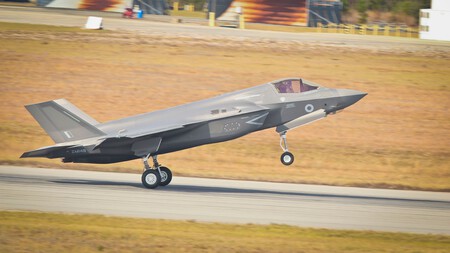
<span>An F-35 landing</span>Structural limitations further impede progress. As noted by The Register, the STOVL design imposes significant constraints on payload capacity and operational range, affecting its effectiveness in high-stakes combat scenarios. While this perspective isn’t part of the official NAO report, it reflects widespread concerns among specialists. Additionally, projections suggest that the full lifecycle cost could escalate to £71 billion (approximately €81.9 billion).
The Problems Are Not Alone
Even with operational deployment of the F-35B, the statistics point to limited capacity. In 2024, only about one-third of the fleet was available to perform the requisite missions. The structural issue lies in the UK’s inability to fill essential roles needed for system operation and maintenance. Skilled engineers are scarce , and extended deployments on aircraft carriers discourage many from considering the F-35 as a viable career path.
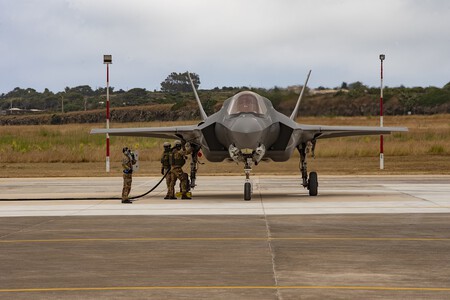
<span>A F-35B of the United Kingdom</span>Assured supply lines for parts are also problematic. The global logistics network, managed from the U.S., has not kept pace with the growing international fleet. This has led to logistical bottlenecks, delayed shipments, and an increasing reliance on temporary fixes. Although improvements in availability rates were noted during the 2025 Carrier Strike Group deployment, it is uncertain whether these rates will be sustained post-operation.
Despite ongoing delays and complications, the United Kingdom holds a prominent position within the International F-35 program. As the only Level 1 partner in this U.S.-led initiative, the UK has 38 personnel from the Ministry of Defense integrated into the central project team in Washington, more than any other nation. This collaboration has yielded tangible benefits: British firms contribute at least 15% of the total value of each F-35 unit produced.
An Eye on the Future
While the F-35B grapples with existing challenges, the United Kingdom is proactively developing its next-generation fighter project: the Tempest program, which has been part of the multinational initiative Global Combat Air Program (GCAP) since December 2022, in collaboration with Italy and Japan.
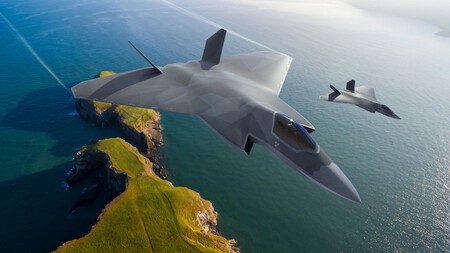
<span>Conceptual image of the future Tempest fighter program</span>This ambition, spearheaded by BAE Systems (UK), Leonardo (Italy), and Mitsubishi Heavy Industries (Japan), aims to develop a sixth-generation stealth aircraft by 2035, with prototypes expected to fly before 2028. The program headquarters is located in the UK, emphasizing a commitment to developing an open-architecture platform with national control over engines, aircraft design, sensors, and weapons for increased technological independence from the U.S. Nonetheless, the journey is not without challenges; Italy has raised concerns about transparency regarding technology transfers from the UK.
Images | Raf (1, 2), | Adrian Pingstone | BAE Systems
In conclusion, while the F-35B Lightning is a cutting-edge fighter jet with immense potential, its operational challenges highlight the complexities involved in modern military aviation. The UK’s investment and focus on future projects like Tempest indicate a strategic commitment to maintaining aerial superiority amidst evolving global threats.