
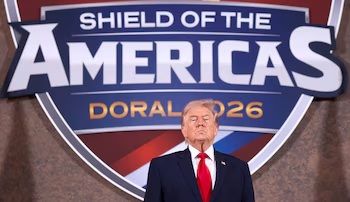
The Shield of the Americas Initiative: Trump’s Strategy Against Drug Trafficking and Global Threats
Donald Trump recently unveiled the Shield of the Americas initiative in Miami, a pivotal regional alliance engaging leaders from twelve nations. This unprecedented collaboration aims to tackle drug cartels linked to terrorism, particularly those associated with Iran, while addressing China’s aggressive trade tactics.
A Multifaceted Alliance
The Shield of the Americas stands out by integrating diplomatic efforts with military agreements, having been reinforced just days prior by a Pentagon-led accord with twenty regional countries. Trump’s strategy underscores Washington’s commitment to combat a surge in transnational crime, particularly the intertwined relationships between Latin American drug cartels and Hezbollah’s covert cells operating in support of Tehran.
Key Concepts of the Initiative
In a compelling 40-minute speech, Trump articulated four essential tenets of this initiative as a corollary to the Monroe Doctrine, marking a robust geopolitical stance for the Americas:
Confronting Territorial Control: Trump criticized past leaders for allowing vast regions in the Western Hemisphere to succumb to transnational gangs. He emphasized a commitment to support these nations in resisting the violence inflicted by drug cartels.
Military Engagement: He declared, “We have to use our army. You have to use yours,” highlighting the necessity of military cooperation to dismantle these cartels and terrorist networks.
Lethal Force Commitment: The core of the agreement involves a pledge to deploy lethal military action against malign entities, reinforcing the urgency to eradicate these threats once and for all.
Broader Threats: While specific references to China were absent, the initiative subtly acknowledges the need to guard against external threats, drawing attention to malign foreign influences.
The Political Landscape
The gathering included notable leaders from Argentina, Bolivia, Chile, Costa Rica, and various other Latin American countries. Trump personally recognized each leader, establishing a unified front against common threats. This approach not only fosters regional stability but also reinforces U.S. influence in South America.
Marco Rubio, as Secretary of State, played a crucial role in articulating the strategic vision behind the initiative. His facilitation of bilateral communications and military preparations demonstrates the integrated approach between diplomatic dialogue and military readiness.
Implications of the Initiative
The Shield of the Americas holds significant implications for the geopolitical landscape. The coordinated military training and mobilization efforts aim to forge a robust defense against not only drug trafficking but also broader security challenges posed by Iran and the encroachment of China in the region.
By signing a formal declaration, Trump delineated the objectives of this initiative, emphasizing the need for collaborative action against criminal organizations. The statement mandates allies to coordinate efforts to undermine these groups financially and militarily, thereby restoring stability to the hemisphere.
Conclusion
The Shield of the Americas marks a crucial step in Trump’s strategy to confront insecurity in the Western Hemisphere. By uniting nations against drug cartels and external threats, this initiative seeks to establish a formidable alliance that prioritizes regional stability, military readiness, and effective governance against malfeasance. As the situation evolves, the long-term effectiveness of this strategy remains to be seen, but its foundation sets a precedent for future collaborations in the face of multifaceted global challenges.