
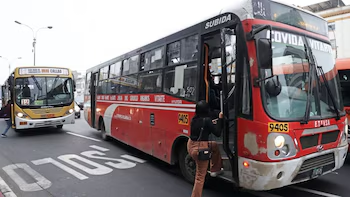
Goodbye to the ‘Luca’: How the NGV Crisis Is Impacting Ticket Prices in Public Transport
Introduction to the NGV Crisis
The ongoing NGV (Natural Gas Vehicle) crisis is causing significant turmoil in Peru’s public transportation sector. Fares are rising as buses across districts such as Villa María del Triunfo, San Miguel, and Miraflores adjust to the crisis, prompting an increase of S/0.50 in fares. This shift marks the potentially permanent farewell to ‘luca’, the minimum fare of S/1.
Fare Increases and Impact on Commuters
Reports indicate that transport lines, particularly the EVIFASA service on route 2305 to San Juan de Lurigancho, have officially begun to hike their prices. “The situation is dire,” said transport line officials, echoing sentiments reverberating across social media platforms. Commuters are left to grapple with the impact of not just rising fares but also dwindling public transport options as the crisis deepens.
Speculation in Gas Prices
While public transport fares were once stable, the speculation surrounding gasoline and diesel prices has thrown the system into disarray. With natural gas supplies strained due to government rationing and potential shortages, many operators find themselves forced to switch to more expensive fuels. This change not only affects private taxis and vehicles; public transport operators are compelled to pass increased costs to consumers.
Understanding the Economic Dynamics
In a free market, the law of supply and demand reigns supreme. Since the government rationing of CNG has been implemented, the consequent shortage has forced many drivers to rely on gasoline. Consequently, this increased competition for alternative fuels leads to speculation regarding prices, placing further strain on public transportation routes that are already suffering from rising operational costs.
Challenges Beyond Ticket Price Hikes
As the minimum fare of S/1 for short trips bids farewell, other forms of public transport are not exempt from the crisis. The government’s prioritization of CNG for public buses does not extend to taxis, vans, or dual-fuel buses. Since these vehicles can switch between fuel types, they too contribute to heightened demand and fluctuating prices.
Government’s Response to the Crisis
During a recent press conference, Transport and Communications Minister Aldo Prieto Barrera highlighted the alarming reality: only 6,000 public transport units will be able to sustain operations under the current CNG supply conditions. This affecting all major transport services, including the Metropolitano and Corredores buses, raises concerns for both drivers and commuters.
Future Outlook: Potential Solutions
As the government evaluates solutions to release additional natural gas capacity, hope remains that the situation may stabilize. Repair initiatives could tentatively resolve the supply challenge by mid-March. However, until this occurs, commuters can only brace for an uncertain future marked by rising ticket prices and limited transportation options.
Conclusion
The NGV crisis not only symbolizes a shift in the public transportation landscape but also a significant economic hurdle for the people of Peru. As the farewell to ‘luca’ looms, the challenges ahead will require both government intervention and public understanding to navigate this evolving scenario. The months ahead will reveal how well the transport system can adapt and what strategies can be employed to alleviate the burdens on everyday commuters.