
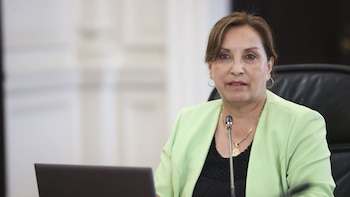
The government has officially announced a significant increase in the monthly remuneration for the office of the President of the Republic , raising it to S/35,568 . This decision, formalized through a Supreme Decree and supported by the Council of Ministers , directly benefits President Dina Boluarte , who previously earned a salary of S/15,600.
This adjustment aligns with the Civil Service Law (Law No. 30057), which governs the compensation for public officials. Specifically, Article 52 categorizes elected public officials, mandating that their salaries be determined by a Supreme Decree approved by the Council of Ministers .
The decree stipulates that the General Directorate of Fiscal Management of Human Resources at the Ministry of Economy and Finance will automatically register this new salary in the centralized public sector systems.
The salary increase positions Boluarte among the highest-paid leaders in South America . With a monthly income nearly reaching USD 10,002.25 , Peru’s president now ranks second in the region, second only to Luis Lacalle Pou , the president of Uruguay , whose salary exceeds USD 22,289 —more than double Boluarte’s earnings.
In comparison, Boluarte’s salary surpasses those of the presidents of Colombia, Chile, Brazil, Paraguay, Ecuador, Argentina, Venezuela, and Bolivia.
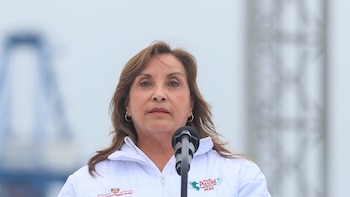
A report from the program “Good Morning Peru” analyzed Dina Boluarte’s increased salary, calculating her monthly income across various time intervals. At the official figure of S/35,568 per month, the annual total amounts to S/426,816 , since the presidential remuneration package includes 14 salaries annually, with bonuses given in July and December.
From this annual income, daily and hourly earnings were derived. Dividing the monthly salary by 30 days, Boluarte earns around S/1,185.60 daily. When calculated on an hourly basis over a 24-hour day, her earnings come out to approximately S/49.40 per hour and S/0.82 per minute . For context, these figures are striking when juxtaposed against Peru’s minimum wage , which is merely S/1,025 per month—a sum that Boluarte surpasses within a single day.
The head of the Ministry of Economy and Finance, Raúl Pérez Reyes , stated that this measure intends to rectify an earlier decision while ensuring appropriate compensation for those in the highest public office. “Former President Garcia had reduced the salaries of major public officials. In 2015, President Humala raised salaries for ministers and vice ministers, and now it is time to correct the presidential salary, which will also benefit anyone who holds the position next July,” he asserted.
In summary, Dina Boluarte’s salary increase not only significantly boosts her earnings but also positions her as one of South America’s highest-paid leaders. While the legal implications of this decision are clear under the Civil Service Law, public opinion may well scrutinize the disparity between presidential earnings and the average wage in Peru. As Boluarte continues her term, this development may present both opportunities and challenges for her administration in navigating economic inequalities.