
Uncovering Tiwanaku: An Ancient Civilization’s Hidden Legacy
The name Tiwanaku might not resonate widely compared to renowned pre-Hispanic civilizations like the Incas , Aztecs , or Maya . Yet, before the arrival of Europeans on the South American continent, this enigmatic society demonstrated an extraordinary mastery over its environment, leaving a lasting impact that is only now beginning to surface.
A recent discovery has provided compelling evidence of this ancient civilization’s capabilities.
Researchers have documented a temple built by the Tiwanaku civilization, located over 200 kilometers from their access point. Approximately 210 kilometers south of the heart of Tiwanaku, this temple sheds light on the geographical expanse of this pre-Columbian culture and its influence.
The State of Tiwanaku: A Historical Overview
Tiwanaku flourished in the region south of Lake Titicaca , in present-day Bolivia. It emerged as one of the most powerful civilizations in the area, lasting until around the year 1000 CE, which paved the way for the rise of the Incas five centuries later. Despite its early prominence, the intricacies of Tiwanaku’s social structure and cultural practices remain shrouded in mystery.
According to the research team responsible for this recent discovery, Tiwanaku displayed advanced societal organization , characterized by monumental architecture in the form of pyramids, temples , and monoliths scattered around Lake Titicaca. Understanding the area’s full influence has remained a challenge among historians, but this newly found temple could provide crucial insights.
Exploring the Palaspata Temple
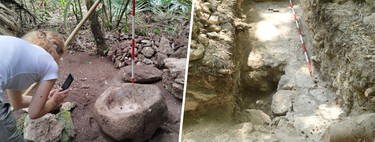
This recent archaeological site has been named the Palaspata Temple , reflecting the local indigenous term for the area. The ruins reveal a rectangular complex measuring approximately 125 meters in length and 145 meters in width. The site featured 15 quadrangular enclosures centered around an inner courtyard, suggesting a designed layout possibly aligned with the equinox .
Notably, artifacts found within the temple include fragments of Keru glasses , traditionally used for the consumption of chicha , a fermented corn beverage. Since corn is not indigenous to the area, researchers believe that the Palaspata Temple may have functioned as a commercial hub , indicating trade networks established by the Tiwanaku civilization.
Innovative Archaeological Techniques
The review of Palaspata involved sophisticated techniques, combining satellite imagery with drone photos to uncover the temple’s remnants. The researchers employed photogrammetry , a method that generates three-dimensional reconstructions from multiple photographs, allowing for a detailed examination of the ruins.
The findings were officially published in an article in the journal Antiquity, marking a significant contribution to our understanding of this ancient civilization.
Recycling Historical Artifacts
Despite its recent discovery, the Palaspata Temple’s remnants were already fairly familiar to local inhabitants. In fact, several stones and artifacts originally part of the temple had been “recycled” into local construction projects, indicating the ongoing relevance of Tiwanaku’s legacy in the region.
A Triple Border: Strategic Importance
The Palaspata Temple’s location is significant. Researchers highlight that it served as a connection point among three major trade routes, facilitating interactions between diverse ecological zones: the fertile lands near Lake Titicaca, the Andean Altiplano —a livestock area favorable to llama cultivation—and the agrarian valleys to the east of Cochabamba . This strategic position likely contributed to Tiwanaku’s economic and cultural prominence.
Through these findings, the resurgent interest in Tiwanaku not only enriches our understanding of ancient Bolivian societies but also challenges the mainstream narratives dominated by more recognized civilizations. The newly uncovered Palaspata Temple is a testament to the enduring influence of the Tiwanaku civilization and urges us to reevaluate its place in world history.
In essence, the Tiwanaku civilization, once overshadowed by its more recognized counterparts, offers invaluable insights into ancient South American cultures. Its discoveries remind us of the rich diversity that existed before European contact. By uncovering its past, researchers are piecing together a more comprehensive narrative that honors all ancient civilizations across the continent.