
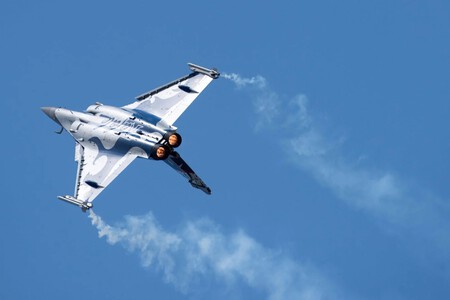
India has launched one of the most ambitious military acquisition movements in recent years, a process that, due to its economic volume and strategic dimension, transcends the national sphere and fully connects with the industrial and geopolitical balances observed globally. Although the decision does not yet amount to a signed contract or finalize all technical details, it indicates a favorable direction where several global powers are competing. In this initial context, France appears well-positioned to play a central role if the next phases of the acquisition process proceed as anticipated by Indian authorities.
On February 12, 2026, the Defense Acquisition Council, chaired by Defense Minister Rajnath Singh, granted the so-called “Acceptance of Necessity” to a set of acquisition proposals valued at around Rs 3.60 lakh crore, equivalent to roughly €33.5 billion. The preliminary approval encompasses the purchase of Multi Role Fighter Aircraft (MRFA), identified as Rafale, alongside combat missiles and a high-altitude aerial system for intelligence, surveillance, and persistent reconnaissance.
The Move That Can Change India’s Aerial Balance
It’s essential to understand this administrative nuance as it defines the real implications of the announcement. We are not facing a contract yet; rather, this serves as a green light for the armed forces to begin the formal acquisition process within the approved budget framework. This could lead to months or even years of commercial phases, technical negotiations, and industrial adjustments before a definitive signature is achieved.
Specialized media, such as Defense News, suggest that the approved proposal could include the purchase of 114 Rafale jets. The timing of this institutional approval, just days before French President Emmanuel Macron’s visit to India, hints at ongoing political and industrial discussions.
To understand France’s potential role, one must consider the competitive context of this process, which sees the Rafale proposal standing alongside offers from The United States with its F-35 and Russia with the Su-57E. These platforms aspire to play crucial roles in India’s aerial modernization program.
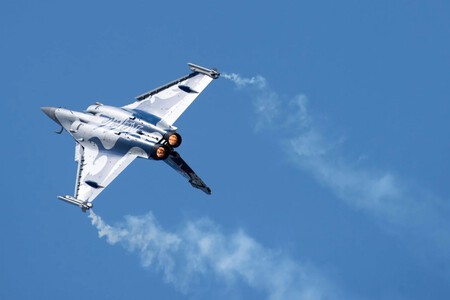
To grasp why the Rafale is now at the center of this discussion, it’s crucial to consider its characteristics within the realm of contemporary combat aviation. It is a twin-engine fighter originally designed as a multirole aircraft capable of operating from both land bases and aircraft carriers. It executes missions ranging from air superiority to reconnaissance and deep attacks, having entered service with the French Navy in 2004 and with the Air Force in 2006.
The Rafale is not a single model; rather, it is a family of aircraft with a high degree of common elements that can be adapted according to the operational environment. Dassault Aviation distinguishes three configurations tailored for different deployment needs:
- Rafale C: single-seat variant for conventional combat missions.
- Rafale M: naval version designed for aircraft carrier operations, featuring reinforced landing gear.
- Rafale B: two-seat configuration for training and missions requiring crew workload sharing.
The technical capabilities of the Rafale bolster its position in international markets. According to its manufacturer, the Rafale can undertake a broad range of combat missions, supported by advanced sensors and systems — such as digital flight control and automatic terrain collision avoidance, allowing for exceptional performance in diverse roles.
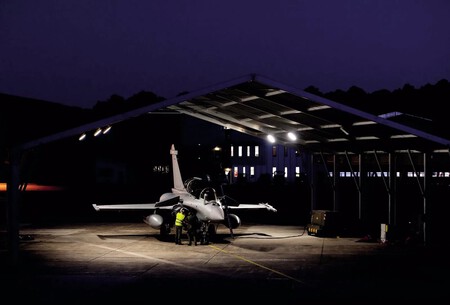
The specific aircraft models that the Indian Air Force would receive remain uncertain. Notably, there are no official public details confirming the versions of the Rafale or the exact systems and weapons associated with any potential order.
In the naval sector, a clearer focus emerges. The agreement with the Indian Navy includes 26 Rafale M devices. India already operates 36 Rafales, integrated into various bases since 2020. This scenario reflects a strategic inclination interwoven with a process that remains open, pending final negotiations and configuration decisions.
Images | Dylan Agbagni (CC0 1.0 Universal) | Dassault Aviation