
Federal Reserve’s Interest Rate Strategy: Jerome Powell’s Insights
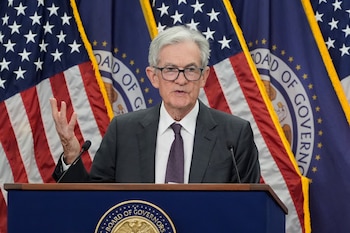
In a recent high-profile speech , Federal Reserve Chairman Jerome Powell indicated the possibility of a slight reduction in the key interest rate in the coming months. However, he refrained from specifying a timeline for such changes, emphasizing the need for caution as the Central Bank continues evaluating the effects of tariffs and other economic policies.
During the address, which garnered significant attention from both the White House and Wall Street , Powell stressed the dual risks of rising unemployment and persistently high inflation. This situation places the Fed in a challenging position : traditionally, it would lower short-term interest rates to stimulate hiring, yet maintaining or even raising rates may be necessary to combat inflation.
Powell noted, “The stability of the unemployment rate and other indicators of the labor market allows us to proceed with caution when considering changes in our political position.” This statement implies that the Fed will continue to monitor employment and inflation metrics closely before deciding on any interest rate cuts during its upcoming meeting scheduled for September 16 and 17 .
Further addressing the economic conditions, he remarked, “However, with monetary policy in restrictive territory, the basic perspective and the changing balance of risks can justify an adjustment of our political position.” This marks a more direct indication of considering a rate cut than in previous comments.
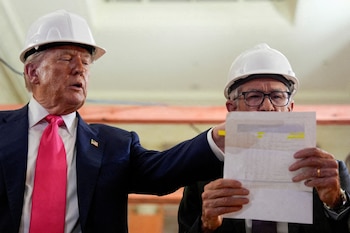
Despite Powell’s caution, his comments seem to signal that the Fed will continue to exercise restraint in the coming months. The decisions regarding interest rates will be closely tied to the evolution of inflation and unemployment , possibly frustrating financial markets that had hoped for clearer indications about the Fed’s direction. President Donald Trump has also publicly criticized Powell for not enacting rate cuts sooner.
During the annual economic symposium held in Jackson Hole, Wyoming, which attracted approximately 100 academics, economists, and central bank officials globally, Powell conveyed the underlying economic concerns. He stated that market expectations for a September rate cut have shifted, as recent financial practice forecasts have shown a decline in these probabilities.
Trump has been vocal in advocating for rate cuts, repeatedly suggesting that “there is no inflation” and arguing that lowering rates would ease government interest payments on its substantial debt of $37 billion. The tension escalated when Trump and his associates intensified their attacks on the Federal Reserve, including calls for the resignation of a Fed governor, Lisa Cook , following allegations of mortgage fraud.
In his address, Powell reiterated the influence of tariffs , acknowledging that they are contributing to rising inflation and may escalate it further in the upcoming months. He emphasized that the labor market continues to show resilience, indicating that the Fed does not necessarily need to lower interest rates to stimulate growth and job creation.
With regards to tariffs, Powell commented, “The effects of tariffs on consumer prices are now clearly visible. We foresee that these effects accumulate in the coming months, creating great uncertainty regarding timing and magnitude.” As inflation rose 2.7% in July compared to the previous year, surpassing the Fed’s 2% target, it shows that underlying pressures are still persistent, with core prices (excluding volatile food and energy sectors) climbing to 3.1%.

While inflation has shown some signs of moderation since its peak of 9.1% three years ago, it is crucial to understand the ongoing risks associated with it. The recent increase in consumer prices reflects heightened pressures from imported goods, such as furniture, toys, and shoes. As hiring has slowed notably this year, Powell indicated that while unemployment rates remain low, employers may not require as many new positions to keep employment levels stable.
Ultimately, Powell underscored that the risks of a potential recession continue to loom large, with signs of increased layoffs adding to the complexity of the current economic landscape. His insights reiterate the delicate balance the Federal Reserve must navigate in these challenging economic times.
With AP information