

Controversy Erupts Over Colombia’s Pension Reform
In a significant turn of events in Colombia’s ongoing pension reform saga, Lina María Garrido , the second vice president of the House of Representatives, announced her intentions to file a lawsuit aimed at nullifying the presidential decree which authorized extraordinary sessions for the pension reform debate. The aim is to address alleged legal vices that cast doubt on the validity of the government’s actions.
Garrido contends that the government relied upon a judicial document that was not considered final at the time of its issuance. This raises significant concerns regarding procedural integrity and transparency. “This is an illegal action by the Government to rectify the issues pointed out by the Constitutional Court in the pension reform process,” she stated.
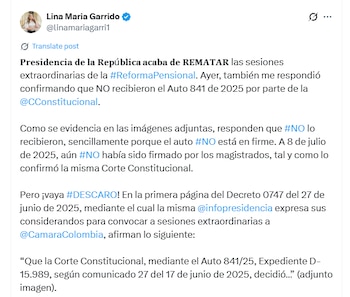
In a poignant post on her X account, Garrido encapsulated her outrage: “The Presidency of the Republic has just finished off the extraordinary sessions related to the pension reform. They dared to cite a car that does not exist… do me the favor! … Mañosa, I am going to knock them out the extraordinary sessions to learn to be serious! ” This strong language reflects the brewing tensions surrounding the pension debate.
On July 10, Garrido shared a communication from the Legal Secretariat of the Presidency , confirming the non-receipt of the critical document in question, known as car 841 of 2025. It highlights a lack of transparency in proceedings, further complicating an already tumultuous legislative landscape.
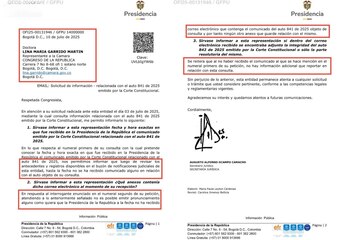
The Constitutional Court clarified that the crucial document remains in the process of documentation , asserting that it has yet to be formally issued. The question of validity looms large as observers consider how these developments will affect the progress of the pension reform .
The House of Representatives had initially approved the pension reform on June 28. However, this latest controversy surrounding the extraordinary sessions casts a shadow of doubt on the entire legislative process aimed at rectifying previous court findings. Garrido emphasized that mere communications from the Court, even if issued, do not carry binding authority.
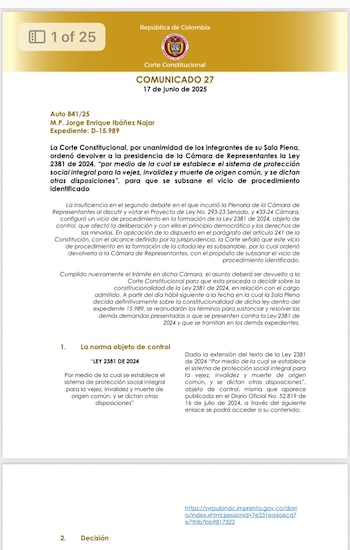
Following this chain of events, Garrido is expected to proceed with her lawsuit against Decree 0747, claiming the government operated without sufficient legal backing for initiating the extraordinary sessions. This lawsuit could lead to the invalidating of the extraordinary sessions, thus jeopardizing one of the essential legislative objectives of President Gustavo Petro’s government .
In light of increasing opposition and growing scrutiny, Colombia’s pension reform efforts face an uphill battle to instill public trust and legislative accountability. With the underlying issues of legality and transparency persisting, the government must address these challenges to advance its reform agenda. The outcome of this unfolding scenario promises to resonate far beyond legislative halls, impacting the lives of ordinary Colombians who rely on a robust pension system.