
Impact of US Tariffs on Brazilian Exports
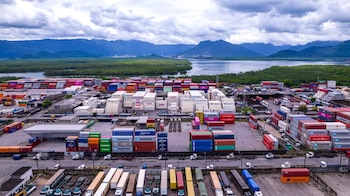
The imminent entry into force of the 50% tariff announced by US President Donald Trump has raised alarms at the Port of Santos, Brazil’s main logistics hub and the major commercial port of Latin America. Located just over 70 kilometers from São Paulo, Santos manages about 30% of Brazil’s foreign trade, with 22% of exports aimed at the United States.
The impact of this tariff measure is expected to be felt almost immediately. “We’re likely to suffer an impact,” warned Anderson Pomini, president of the Port Authority of Santos. In a simulation presented to the Brazilian government, he indicated that logistics operations will need immediate adjustments, as several key bilateral trading products will be affected.
The tariff measure notably targets flagship products of Brazilian agribusiness, such as coffee and orange juice, which heavily depend on the Santos port infrastructure. According to official statistics, 74% of coffee and 95% of orange juice exported by Brazil leave through this port. Remarkably, 60% of the juice consumed in the US originates from Brazil.
Logistics for these products involve intricate processes. For example, orange juice must be transferred through pipes to refrigerated vessels where it is frozen for weeks during transport. The imposition of a 50% tariff significantly raises operational costs: the ton of juice, currently priced at $1,600, could soar to $2,400 once the sanctions take effect on August 1.
For coffee, the situation is similarly precarious. Although a 10% tariff was previously established by Trump—manageable compared to tariffs imposed on Vietnam or Indonesia—the new higher tax would place Brazilian coffee at a competitive disadvantage. Brazil captures approximately one-third of the American coffee market, with average consumption hitting three cups per person daily.
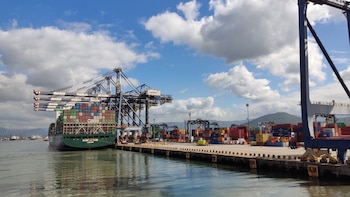
The announcement of the tariffs has triggered an interesting logistics challenge: a sudden spike in loading activity. “Companies affected are rushing to expedite deliveries. We anticipate a peak in activity,” Pomini noted. The urgency to mitigate the new tax burden has compelled logistics managers to adopt early supply strategies, thus putting pressure on transport and storage networks.
Although shipping blockages have not yet been reported at the Port of Santos, some operators have cited restrictions at other terminals. Meanwhile, the Brazilian government has initiated discussions with other nations to redirect exports to alternative markets. “If we act promptly, we can minimize the impact on trade for these products at Santos,” Pomini emphasized.
Additionally, President Luiz Inácio Lula da Silva has revealed plans to engage the US in negotiations aimed at reversing the tariffs. If negotiations fail, Brazil could retaliate with reciprocal tariffs, which would further strain an already delicate commercial relationship.
The adaptability of the Brazilian logistics system is currently under scrutiny, demonstrating how sensitive port infrastructure is to shifts in global trade policy. In Santos, where cargo embarkation symbolizes the linkage between the Brazilian agricultural sector and global gondolas, the central challenge will be to renegotiate, redirect, and restructure operations without hampering the flow of exports.