
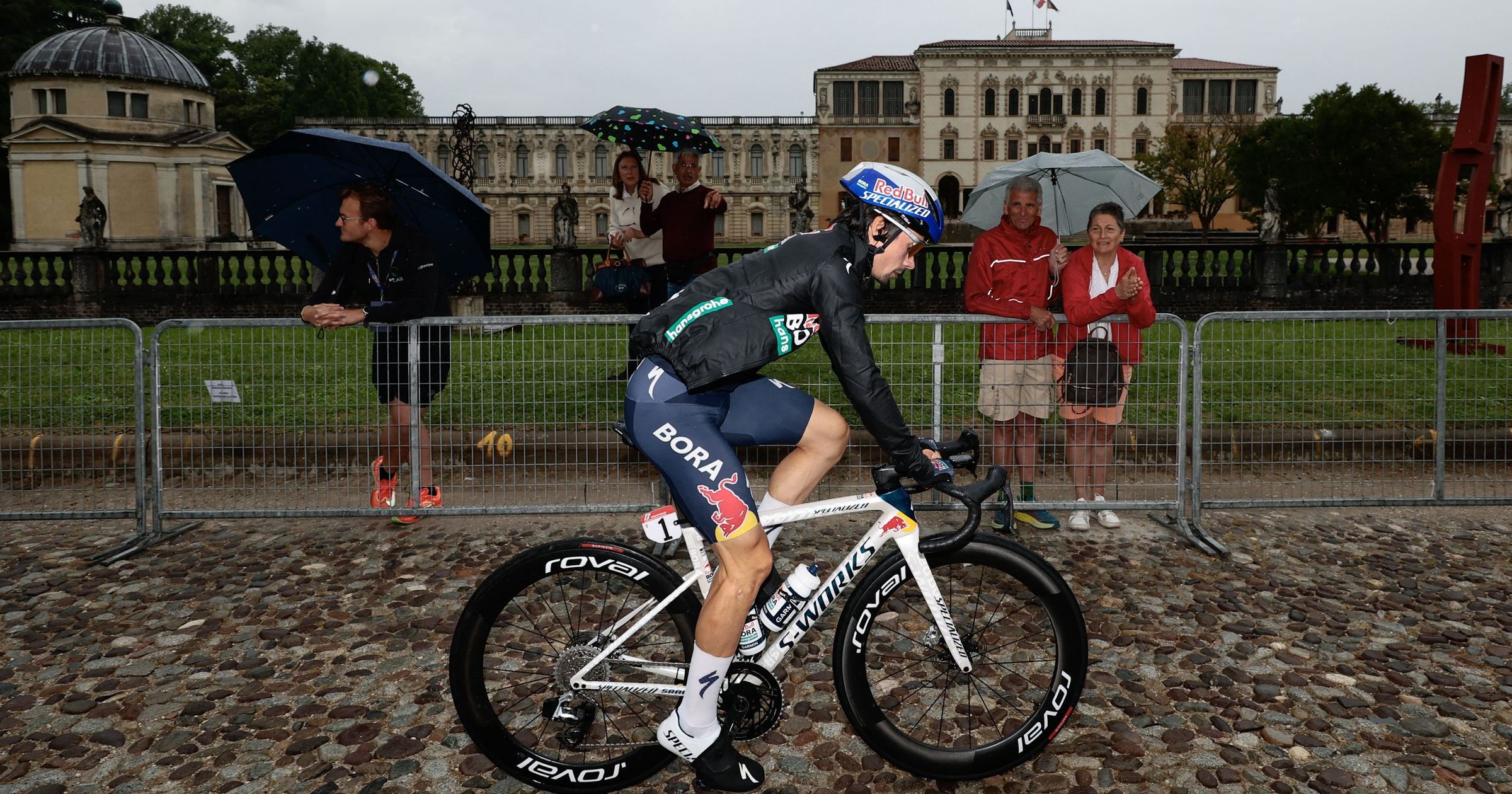
The Challenges of Cycling: A Close Look at Primoz Roglic’s Abandonment at the Giro d’Italia
Introduction: The Intensity of Competitive Cycling
Cycling is a sport that demands both physical endurance and mental fortitude. Athletes must train rigorously to compete at the highest levels, facing numerous challenges along the way. One of the most notable recent events in cycling history is the abandonment of Primoz Roglic during the 16th stage of the Giro d’Italia. This incident not only highlights the unpredictable nature of the sport but also raises questions about the challenges faced by professional cyclists.
The Incident: A Test of Limits
On Tuesday, during a crucial stage, Primoz Roglic, representing RedBull-Bora Hansgrohe, decided to abandon the race after a harrowing crash on the wet descents leading to San Valentino. The incident occurred approximately 100 kilometers from the finish line, reinforcing the dangers that cyclists encounter, especially under adverse weather conditions. The Organizer of the race noted that Richard Carapaz from EF Education-EasyPost was also involved in this unfortunate event.
The Aftermath: Impacts on Team Strategy
Roglic’s decision to abandon posed significant challenges for the German team. Losing a lead rider like Roglic necessitates a re-evaluation of the race strategy. Other team members, such as Giulio Pellizzari, Daniel Felipe Martinez, and Jan Tratnik, must now step up to fill the void left by their leader. This situation underscores the importance of team dynamics in cycling and how one rider’s misfortune can alter the course of an entire event.
Athletic Resilience: The Quest for Recovery
For Roglic, this abandonment comes after a period of lackluster performance. Having suffered previous falls during reconnaissance for the time trial in Pisa and on the white roads of Siena, he has been grappling with physical challenges that hinder his abilities. Just last week, he lost nearly 1.5 minutes in the final ascent, slipping down to 10th place and falling 3 minutes and 53 seconds behind the pink jersey holder, Isaac del Toro from UAE Emirates-XRG. This downward spiral raises concerns about his readiness for future competitions.
Competitive Environment: Facing Other Titans
With the Tour de France on the horizon, which kicks off on July 5 in Lille, Roglic must now regroup both mentally and physically. The competition is fierce, with notable rivals like Tadej Pogacar, Jonas Vingegaard, and Remco Evenepoel all gearing up for the challenge. As a former winner of the Giro d’Italia, Roglic has the experience and skill necessary, but whether he can bounce back remains to be seen.
Lessons from the Giro d’Italia
The Giro d’Italia is as much about strategy as it is about physical capability. Roglic’s situation serves as a reminder that even the best can stumble when conditions are not in their favor. His abandonment emphasizes the necessity for cyclists to maintain physical fitness and mental clarity to navigate the myriad challenges presented during a stage race.
Injuries and Their Psychological Toll
Injuries in competitive cycling can be devastating, not just physically but also psychologically. The fear of falling can haunt a cyclist, affecting their performance. Roglic’s repeated encounters with the pavement may lead him to question his own abilities or decision-making skills. This mental burden can be as heavy as the physical toll, impacting how athletes prepare themselves for races.
The Renewed Focus: Future Seasons
Moving forward, Roglic and his team will need to establish a robust recovery plan. As they prepare for the Tour de France, it becomes essential for Roglic to focus on rehabilitation and strategic planning. Analyzing data, assessing weaknesses, and bolstering his mental resilience will be crucial steps in his preparation.
Insights from Roglic’s Experience
Roglic’s experience offers valuable lessons not just for him but for all athletes. The unpredictability of sports means that no matter how prepared one might feel, circumstances can change in an instant. Adapting to these changes is part of being a successful athlete.
Conclusion: A Long Road Ahead
The path may be rocky, but with determination and strategic planning, Roglic can reclaim his status in the cycling world. The challenges he faces are not unique to him but are part of a larger narrative that unfolds with every race. As he and his team strategize for the Tour de France, fans and competitors alike will be watching closely to see how he bounces back.
Il n’était pas au mieux et voulait se tester. Primoz Roglic (RedBull-Bora Hansgrohe) a abandonné le Tour d’Italie au cours de la 16e étape. Le leader slovène a jeté l’éponge après avoir chuté une nouvelle fois ce mardi en descente sur les routes détrempées du parcours qui emmène les coureurs au sommet de San Valentino. Selon l’organisateur de la course, Richard Carapaz (EF Education-EasyPost) a également été impliqué dans la chute qui est intervenue à une centaine de kilomètres de l’arrivée, dans la descente de la première difficulté du jour.
Après avoir goûté au bitume lors de la reconnaissance du contre-la-montre à Pise, et sur les chemins blancs de Sienne, il n’était pas au mieux et avait payé au prix fort sa méforme dimanche dernier en lâchant près d’1’30” dans la dernière ascension et dégringolé à la 10e place à 3’53” du maillot rose d’Isaac del Toro (UAE Emirates-XRG).
C’est un coup dur pour la formation allemande qui va devoir se réinventer. Giulio Pellizzari, Daniel Felipe Martinez ou encore Jan Tratnik vont pouvoir désormais se porter à l’avant, pour sauver un Giro jusqu’ici bien morose. Pour le Slovène, vainqueur en 2023, il va falloir se remobiliser avant de s’attaquer au Tour de France, dont le grand départ sera donné le 5 juillet à Lille. Il aura fort à faire face à Tadej Pogacar, Jonas Vingegaard ou encore Remco Evenepoel.