
Modern Warfare: The Importance of Intelligence
In modern warfare, possessing superior intelligence often outweighs even the act of firing the first shot. Contemporary military systems now have the capability to monitor vast territories from the air, with some assets costing over $500 million each. However, these powerful tools hinge on a fragile foundation: information.
Without “Eyes” in War
Recently, Iran accomplished a significant feat in military strategy by disabling one of the few key US systems capable of battlefield surveillance, the E-3 Sentry. This aircraft serves as an aerial nerve center, coordinating fighters and detecting threats to sustain air superiority. The loss of this aircraft, which was already operating at a fraction of its intended capacity, has real functional implications. It not only impacts US surveillance capabilities but also heightens blind spots in critical operational theaters.
The High Cost of Intelligence Assets
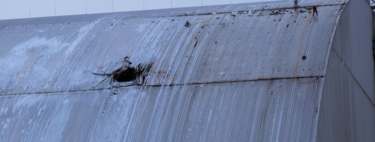
The E-3 Sentry, valued at approximately $500 million, was recently seen devastated on a Saudi airbase, showcasing the vulnerability of even the most sophisticated military assets. The aircraft, specifically its rotating radar dome, is essential for tracking aerial threats over extensive ranges. Its destruction signals a severe setback for US military operations.
Invisible Help: The Role of Russian Intelligence
Adding another layer to this military episode is Russian involvement. Prior to the attack, intelligence sources indicated that Moscow supplied satellite images to Tehran, pinpointing the exact locations of US aircraft at the airbase. This meticulous scouting allowed Iran to execute a surgical strike, dramatically illustrating that in contemporary warfare, the victor is often determined by who sees first, not simply who shoots first.
Aging Fleet and Vulnerabilities
This incident highlighted the precarious state of the US military’s fleet. With only 16 E-3 units, many of which are frequently non-operational, the US can’t afford such losses. Replacement programs are mired in political and logistical challenges, which further complicates the U.S. military’s operational capacity during ongoing conflicts.
Exposed Bases: New Age Weaknesses
The assault unveiled a critical vulnerability: America’s most essential military assets are stationed at inadequately protected bases, making them easy targets for long-range strikes. Attempts to spread out aircraft for security proved insufficient against modern missile and drone technology. The lack of fortified shelters leaves these assets open to attacks, emphasizing that having advanced technology is futile if strategic resources remain vulnerable on the ground.
Adapting to a War of Attrition
Iran has adjusted its military strategy to favor a sustained campaign of smaller, yet constant, attacks aimed at wearing down US defenses over time. This approach reduces the efficiency of US interceptors and other resources, forcing them to deplete crucial assets while maintaining continuous pressure.
Blinding Systems: A New Paradigm
The episode reiterates a vital truth: modern warfare is shifting from merely destroying enemy forces to blinding their systems. By targeting not just troops or infrastructure, but also the information networks that underpin military operations, Iran demonstrates a profound understanding of contemporary conflict dynamics. This emerging paradigm suggests that the power to disrupt an adversary’s command and control could redefine military superiority going forward.
Conclusion: A Signal for Future Conflicts
This significant event serves as a wake-up call for military strategists worldwide. As the battlefield evolves, those who can incapacitate an opponent’s intelligence and command networks will hold decisive advantages, even against technologically advanced forces. In this new landscape of warfare, information truly is the most valuable asset.