
## The Bitter End of France’s 2026 World Cup Journey
The 2026 World Cup concluded with Spain’s triumph, but for the French team, their journey ended prematurely on July 14. In the much-anticipated semi-final against La Roja, the French side faltered, displaying a lackluster performance that left fans and pundits alike disheartened. As a team favored to succeed, France’s elimination came as a shock, and the ramifications of this match will resonate for some time.
### Disappointment and Critique
In the wake of the match, discontent brewed within the squad. Behind closed doors, several players voiced their concerns regarding Didier Deschamps’ tactical choices. One of the most criticized decisions was the inclusion of Aurélien Tchouameni in the starting lineup. Having missed the prior two matches, Tchouameni was not at peak fitness. Meanwhile, Manu Koné’s impressive performances alongside Adrien Rabiot had garnered admiration, suggesting that a different choice might have yielded better results. Discontent also lingered around some substitutions made during the game, questioning Deschamps’ judgment at a critical juncture.
### William Saliba: A Case of Injury and Fatigue
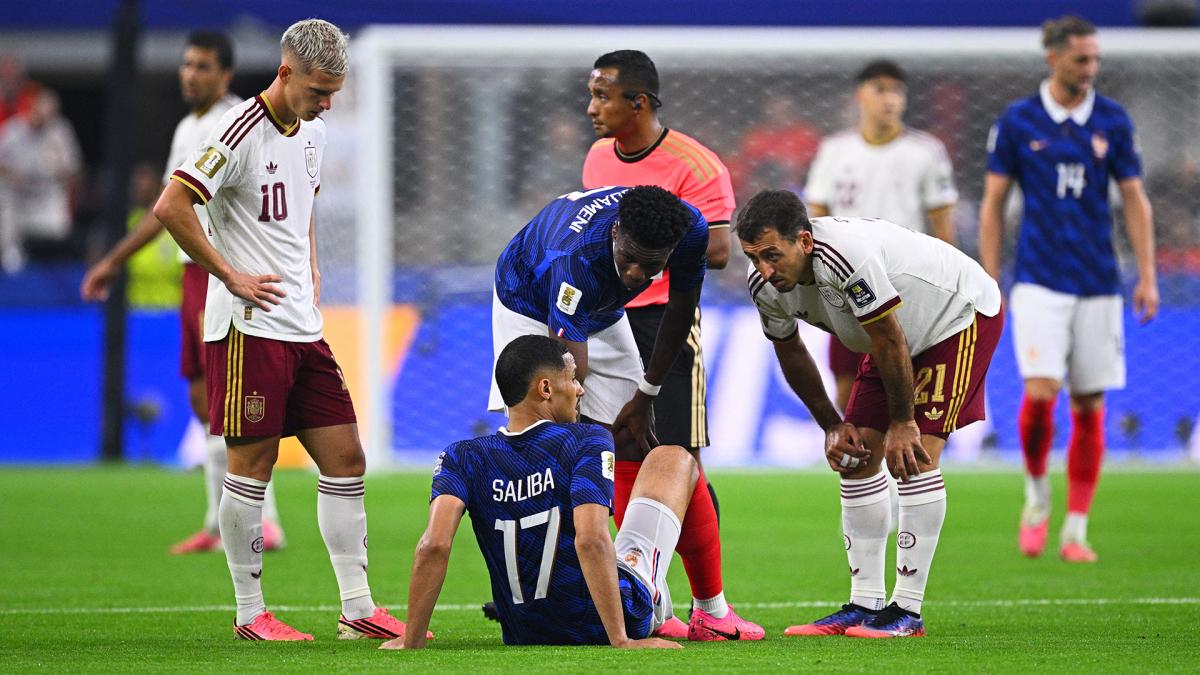
Another significant issue arose with William Saliba, who suffered a back injury during the first half. His inability to perform was not unexpected, as concerns about his health had been prevalent throughout the tournament. Reports indicated that he sometimes struggled with basic movements post-match, raising doubts about his readiness for intense competition. The physical toll of a prolonged World Cup, characterized by closely scheduled matches, complicated training regimens. Balancing intensity and recovery became a formidable challenge as players navigated personal agendas and the general atmosphere of the camp.
### A Mixed Response to Training Regimes
The dynamic within the squad revealed stark contrasts in player motivation. While some athletes, like Warren Zaire-Emery, maintained their commitment despite personal challenges, others seemed to reduce their intensity. Désiré Doué, who oscillated between starting and bench roles, adhered to a strict regimen to optimize his performance, winning praise from the coaching staff. This variance in commitment underscored the difficulty in sustaining collective energy over an extended tournament, where some players shone brightly while others faded.
### Leadership: Kylian Mbappé’s Emergence
Despite the collective disappointment, the World Cup presented an opportunity for Kylian Mbappé to solidify his leadership position within the team. Facing scrutiny after previous international tournaments, Mbappé rose to the occasion, focusing on team cohesion. His roles extended beyond the pitch, as he adeptly negotiated bonus structures, managed off-field player issues, and facilitated discussions about player welfare with the coaching staff. Ousmane Dembélé also stepped up, learning to support Mbappé in these leadership responsibilities, thus ensuring that the team remains cohesive as they look toward future challenges.
### Looking Ahead
The aftermath of the 2026 World Cup poses pertinent questions for the French national team. With emerging leaders and a mix of seasoned veterans, the groundwork is laid for improvement. Reflecting on their disappointing exit, the players must consolidate their experiences and prepare for the next chapter, under a yet-to-be-named new coach. The key now lies in harnessing lessons learned from this heart-wrenching campaign and cultivating a renewed competitive spirit.
As France looks to rebound from this setback, fans and analysts alike will be keenly observing how the team evolves. The potential is immense, but the path forward requires unity, resilience, and an unwavering commitment to excellence.