

What happens when you give an advanced artificial intelligence platform to a group of expert developers and ask them to work on tasks they know inside and out? The logical conclusion would be to expect a productivity leap , a seamless synergy between human expertise and technological assistance. The tools are available, workflows are established, and the learning curve should not pose an obstacle.
But the results were surprising. According to a study reported by Reuters, AI did not enhance productivity; it actually hindered it. The decline in productivity was so subtle that even the developers themselves remained unaware of the deterioration. The study did not report critical failures or severe mistakes; instead, the evidence pointed to a clear trend: work became slower, slower than what could be achieved without artificial intelligence in the mix.
More Does Not Always Mean More Productivity
Initially, the developers were optimistic. They believed that using artificial intelligence would expedite their tasks and had estimated a potential time savings of 24% . These expectations were grounded in their experience and the capabilities that these AI tools promised. Even after completing their work, they remained convinced of their efficiency, believing they had become 20% faster . According to them, AI had facilitated a smooth workflow without disruptions.
However, the reality was quite different. The group collectively experienced an average increase of 19% in total time during the study run by Metr. This is a significant deviation, especially considering that the tasks they engaged in were self-defined as relevant, practical, and realistic, including bug fixing, adding new functionalities, and code refactoring. These were not mere theoretical exercises designed to evaluate the AI, but actual projects involving daily work in mature software environments.
The disparity between expectation and reality left even the researchers speechless. The developers involved were not novices; they had spent years working on the same projects and had a deep understanding of the repositories and intricacies of each file and function. They were experts in their domain, yet the AI tools complicated their workflow rather than alleviating it.
Part of the issue lies in how these platforms function. The suggestions made by AI were often not outright wrong but were marked by imprecision. While they were generally relevant, they frequently required additional adjustments. This need for modification did not save time; rather, it consumed it. Verifying and correcting errors became an iterative process, transforming what was meant to be assistance into an unnecessary intermediary step that complicated the workflow.
Thus, what was initially perceived as fluidity turned out to be an illusion. Developers would begin with a foundational idea, but that base rarely functioned as intended. Developers had to dissect the AI’s suggestions, interpret its recommendations, align them with existing content, and sometimes rebuild entire sections. Each AI-generated suggestion came with an implicit caveat: it was often not ready to integrate directly without considerable alteration. The illusion of increased productivity vanished when it came time to compile or review the generated code .
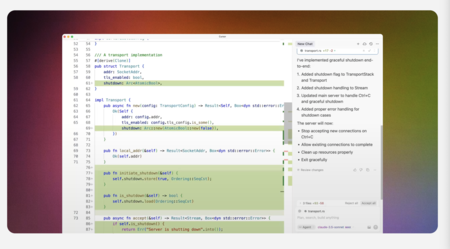
Despite these setbacks, many of the participants continued to utilize these AI-based tools in their daily routines. This was not due to time savings but rather because they made the programming task more tolerable. In the study, developers primarily used Cursor , a platform that integrates advanced language models such as Claude 3.5 and 3.7 Sonnet, to write, complete, and review code seamlessly within their development environment. While Cursor does not offer a complete solution, it provides a sense of companionship that alleviates the sometimes exhausting nature of programming.

The role of AI has transformed programming into something akin to directing an orchestra rather than building from scratch. This shift is evident in the emergence of Vibe Coding . In light of this scenario, some companies have reduced their development teams, believing AI could fill the gaps. However, some of them have had to retract those decisions, realizing that while AI is a potent tool, it does not confer equal advantages to everyone.
Images | Global UI UX Design Agency procreator | Nubelson Fernandes | Cursor
In conclusion, the findings highlight the importance of critically assessing AI tools. While they can augment productivity under certain conditions, their practical implementation may not always align with expectations. Developers and organizations must remain vigilant in discerning how and when to incorporate AI into their workflows, ensuring that it truly enhances their capabilities rather than hinders them.