
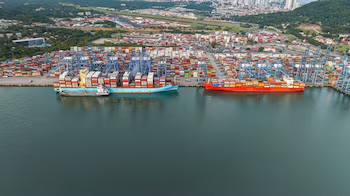
The Impact of Middle Eastern Conflicts on Global Logistics
The geopolitical and energy crisis arising from the ongoing conflict in the Middle East is significantly affecting global logistics chains. One of the most pronounced effects can be seen in the Panama Canal, which is experiencing one of the highest levels of activity in recent history, driven by alterations in international maritime routes and rising fuel prices.
Changing Dynamics of Shipping Routes
According to Panama’s Minister of Economy and Finance, Felipe Chapman, increased tensions in the Persian Gulf, particularly relating to the strategic Strait of Hormuz, have enhanced the appeal of the Panamanian route. Shipping companies are increasingly motivated to optimize costs and transit times through alternative maritime channels.
Traffic Levels and Operational Capacity
The Panama Canal is currently operating near its historical maximum traffic levels. The typical daily average for vessel traffic is around 36 ships, yet during peak demand, the Canal has successfully managed to accommodate between 40 and 42 ships daily. This surge reflects an intensive utilization of its operational capabilities.
Geopolitical Events and Trade Flows
These dynamics underline how geopolitical events can swiftly alter global logistics flows and the competitive landscape of maritime routes. The current scenario is particularly favorable for the Panama Canal, which has developed a more robust infrastructure over the past decade.
Increasing Oil Prices and Routing Efficiency
One primary driver behind this growth is the spike in international oil prices. As fuel costs rise, shipping companies increasingly seek routes that minimize distances, navigation times, and energy consumption. The Panama Canal offers an efficient connection between the Atlantic and Pacific markets, making it an attractive option.
Enhanced Infrastructure Post-Expansion
The Canal’s expansion, completed in 2016, has significantly boosted its operational capacity. Ships classified as Panamax could traditionally carry about 4,000 containers, whereas today’s Neopanamax vessels can transport over 16,000 containers, leading to enhanced efficiency and lower logistics costs per transported unit.
Broader Implications for the Panamanian Economy
The rise in traffic through the Panama Canal is also beneficial for the Panamanian economy. Increased toll revenues bolster public finances, enabling ongoing investments in infrastructure and enhancing the competitiveness of the shipping corridor.
Resiliency in Logistics Infrastructure
This situation emphasizes the critical importance of resilient logistics infrastructure capable of adapting to rapidly changing international scenarios. As uncertainties around the Strait of Hormuz continue, the Panama Canal’s strategic role in global supply chains remains pivotal.
In conclusion, with energy security, logistics costs, and route reliability being paramount for international trade, the Panama Canal is reaffirming its status as a key connection hub between some of the world’s largest markets.