
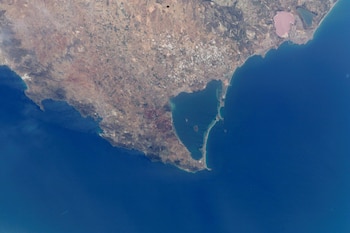
The Mar Menor , a unique ecosystem in Spain, has been officially recognized as one of the Emblematic Initiatives for Ecosystem Restoration by the United Nations as part of the Decade on Ecosystem Restoration (2021-2030) . This initiative, driven by the United Nations Environment Programme (UNEP) and the Food and Agriculture Organization (FAO) , highlights the global importance of restoring delicate ecosystems and underscores the urgency of environmental stewardship.
The announcement was made during the Oceans Conference held in Nice, France , placing the Mar Menor alongside other noteworthy global projects aimed at ecological restoration. These include the Northern Mozambique Channel’s mangrove restoration and efforts in the Mexican archipelago targeting island ecosystem recovery, invasive species eradication, and the conservation of seabirds.
In the words of Paca Baraza , the Water Cycle and Ecosystem Recovery Commissioner, “This honor reflects not just our efforts but also the maximum involvement from our government in restoring such an ecologically degraded area.” The Minister for Ecological Transition and the Demographic Challenge , Sara Aagesen , emphasized that this recognition is a collective achievement and promised to visit Murcia to celebrate it.
Symbol of European Restoration and Institutional Commitment
The Mar Menor has gained recognition for its ecological , social , and cultural value , alongside a comprehensive response from public institutions. This has resulted in the establishment of a pioneering governance model through the Priority Action Framework for the Mar Menor (MAPMM) , initiated by the Spanish government. This framework comprises an investment of €675 million , aiming at large-scale ecological restoration to remap the natural dynamics of the ecosystem and address the structural causes of degradation.
Structured into 10 action lines and 28 specific measures , the plan highlights efforts like the establishment of artificial wetlands and green belts to filter nutrients, restoring degraded mining areas, promoting agriculture compatible with the lagoon ecosystem, improving flood risk management, and actively conserving biodiversity while fostering citizen and institutional participation. These initiatives extend over 8,770 hectares , with €450 million already activated for restoration efforts.
Civil mobilization has played a significant role in this process, with over 500,000 people promoting a Popular Legislative Initiative that led to the legal recognition of the Mar Menor as a subject of rights , making it the first European ecosystem to receive such a designation. This legislative step, along with judicial proceedings based on environmental accountability, has strengthened ecosystem defense from multiple fronts.
A Model for Global Restoration
Being recognized as an Emblematic Initiative provides the Mar Menor with increased international visibility and prioritizes access to technical resources and funding opportunities, especially for developing countries. The Spanish government’s efforts present a transferrable model for regions around the world facing similar environmental challenges.
This milestone reinforces the commitment of the Ministry for Ecological Transition and the Demographic Challenge towards an ambitious, sustained ecological restoration based on scientific evidence, aligned with the objectives of the Green Agenda . The successful restoration of the Mar Menor not only signifies a vital step in environmental recovery but also serves as a beacon of hope for global ecologies in peril.