
The Importance of Judicial Independence in Challenging Times
The President of the Supreme Court (TS) and the General Council of the Judiciary (CGPJ), Isabel Perelló, recently expressed her unwavering support for members of the high court and the broader judicial community who are facing intense pressures and constant disparagement from individuals who disagree with their decisions. She emphasized that respect — a cornerstone of social coexistence — should never be compromised.
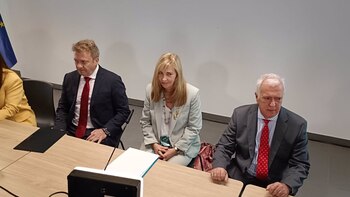
This statement was made during the inauguration of the XXXIII Conference of Magistrates and Chief Judges of Spain in Alicante. Accompanied by significant judicial figures, such as Manuel José Baeza, the President of the Superior Court of Justice of the Valencian Community, and César Martínez Díaz, the chief magistrate of Alicante, Perelló addressed ongoing challenges affecting the judiciary.
Judiciary Under Pressure
Perelló underscored that we are living in challenging times, not excluding the judiciary, which must address new conflicts arising in an environment marked by a "pervasive tension" in public life. The high-ranking official called upon all authorities and citizens to restore respect and put an end to any form of pressure or interference in judicial proceedings.
She argued that while judicial decisions can and should be open to debate and critique — which she believes contributes to improvement — personal attacks against judges are completely unacceptable. Such "intolerable pressures," as she described them, undermine the constitutional duties assigned to the judiciary and erode the public’s trust in the judicial system.
Safeguarding Judicial Independence
Perelló highlighted the CGPJ’s deep concern over efforts to delegitimize judges, underscoring their commitment to vigilantly protect judicial independence now more than ever. She referred to this independence as the "structural foundation" of the Rule of Law and asserted the necessity of respecting judicial decisions, irrespective of the prevailing political interests at any given moment. According to her, systematic disparagement jeopardizes democratic values.
In conjunction with her remarks, José María Páez, a CGPJ board member, commented on the current tumult, indicating that it has created a "strange situation" widely reported in the media. He expressed gratitude for Perelló’s presence, which he believes fosters a closer relationship with judicial leaders. According to Páez, she is doing significant work within the CGPJ, achieving important agreements while keeping the council insulated from the ongoing political turbulence.
Judges as Neutral Actors
Páez emphasized that judges have historically remained on the sidelines of political controversies, highlighting their dedication to carrying out their daily duties irrespective of political labels. He depicted the judicial community as consisting of both progressive and conservative judges who work collaboratively to uphold justice without letting external political issues dictate their responsibilities.
Isabel Perelló’s remarks at this conference initiated an essential dialogue about the sacred nature of judicial independence and the need for a collective effort to preserve it. Her advocacy for respect underscores a vital truth in today’s complex climate: that the integrity of the judiciary must remain untarnished, as it is pivotal for maintaining the democratic fabric that underpins society.
Maintaining judicial independence and a respectful discourse surrounding it is essential not only for today but also for future generations. It lays the groundwork for a legal system that is perceived as fair, unbiased, and just — essential qualities for any functioning democracy. Additionally, public confidence in the judicial system is a benchmark of a healthy society, reflecting the belief that justice will be served without prejudice or undue influence.
The call to action from judicial leaders like Isabel Perelló and José María Páez represents a crucial moment in safeguarding the independence of the judiciary. Only through mutual respect and collaboration can we hope to foster an environment where the rule of law prevails over political tumult, ensuring justice for all.