
Understanding Subsidence in Mexico City
Mexico City faces a geological challenge more pressing than earthquakes: it is experiencing rapid subsidence. This phenomenon refers to the gradual sinking of land, primarily driven by human activities such as excessive groundwater extraction. Water from the subsoil helps to stabilize the ground; without it, sediments become compacted under their weight, resulting in surface-level sinking.
A Century of Sinking
Subsidence in Mexico City is not a new issue. The first recorded instance emerged in 1925, and comprehensive data from 1898 to 2005 indicates that the city has been sinking at alarming rates. During the peak period from 1998 to 2002, the subsidence reached a staggering 40 centimeters per year. The latest satellite data traces the subsidence with greater detail than ever before, providing vital information for a city that is home to over 20 million people.
The Role of NISAR Technology
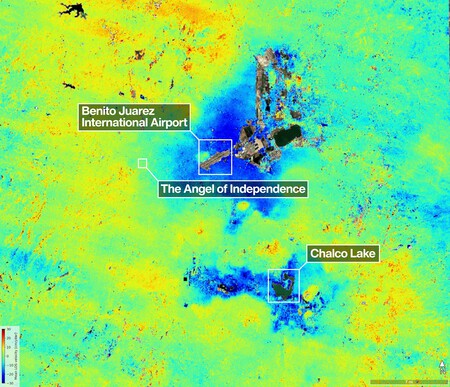
The NISAR satellite mission, a joint initiative between NASA and ISRO, is revolutionizing the monitoring of this geological issue. This project has delivered the most precise mapping of subsidence in Mexico City to date, allowing for real-time tracking. This advanced surveillance system is not just informative; it serves as a crucial survival tool for urban planning and safety management.
Ongoing Rates of Subsidence
Recent figures reveal that the soil in Mexico City is sinking at approximately 35 centimeters per year, while peripheral regions are experiencing a slight elevation. The fresh data covering only three months—October 2025 to January 2026—highlights areas where the rate of subsidence exceeds 2 centimeters per month, indicated by darker shades on the map.
Importance and Economic Impact
The implications of subsidence extend beyond geological concerns; they delve into public safety and economic ramifications. According to The Economist, structural damages resulting from subsidence cost an estimated 67,926 million pesos (around 3.312 million euros) annually. The differential sinking speeds across various city zones contribute to infrastructure damage and stress, particularly in vital systems like the metro.
Environmental Risks
In addition to physical damage, subsidence has severe environmental impacts. It compromises the seismic stability of the soil, elevates flood risks by interfering with natural drainage systems, and encourages the migration of salts and contaminants into aquifers, threatening water quality. These factors collectively trigger alarms for a potential water crisis.
Historical Context
The root causes of this crisis lie in both natural geological conditions and historical urban planning decisions. Mexico City is situated on the ancient bed of Lake Texcoco, which was drained centuries ago. Urbanization on this former lake bed, composed of lacustrine clays, has exacerbated the subsidence issue. The altered water levels from excessive extraction disturb the natural equilibrium, leading to compaction and progressive sinking.
A Vicious Cycle
As urban development expands, less rainwater recharges aquifers due to the proliferation of impermeable surfaces like asphalt. This cycle creates increased demand for water from the aquifers, intensifying subsidence and causing infrastructure damage.
A Path Forward
Unfortunately, reversing this situation may be impossible. Once the pre-consolidation stress limit of the clay is surpassed, the ground’s mineral structures can collapse permanently. Efforts to reduce water extraction alone won’t undo the damage; however, they can mitigate further sinking. Implementing alternative water management practices—such as recycling and surface water penetration—could alleviate some pressure on the aquifers, providing much-needed relief to the megacity.
The Future of Monitoring
The technology behind this critical mapping is cutting-edge. The NISAR satellite employs a unique synthetic aperture radar system that allows it to monitor land surfaces globally with remarkable accuracy. This approach enables it to detect even minor ground displacements, making it an invaluable resource for cities at risk of subsidence.
In summary, while Mexico City grapples with these geological challenges, advancements in technology and a shift in water management practices can help safeguard its future.