
Solar electricity can now be harnessed right under the wheels of trains, paving the way for innovative energy solutions in Switzerland. This groundbreaking project, which began in April 2025, has proven successful, generating interest from neighboring countries like France and Italy, as well as regions in Asia.
What Has Happened?
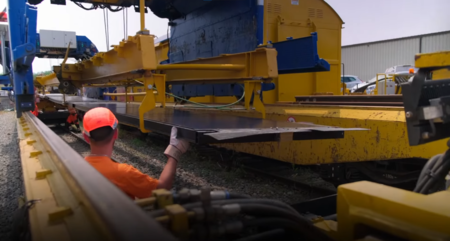
In Buttes, a town located in the canton of Neuchâtel, the startup Sun-Ways installed photovoltaic panels between the rails over a 100-meter stretch. These panels rest on sleepers and claim to be the world’s first installation of this kind. One of their unique features is that they can be easily removed for maintenance work, ensuring the safety and functionality of the railway.
Results After One Year
One year later, over 11,000 trains have successfully traversed the solar panels without any incidents. “We have achieved our objectives, both in terms of railway safety and electricity production,” explained Joseph Scuderi, founder of Sun-Ways. The results indicate a significant positive impact on both safety and renewable electricity generation.
Why Is This Relevant?
The main challenge facing renewable energy sources today is no longer just technology but also land availability. Finding suitable locations for solar panels without encroaching on agricultural fields, forests, or protected landscapes is becoming increasingly complex. Spain has faced this issue, demonstrating the need for innovative solutions like Switzerland’s integration of solar power into existing infrastructure.
Solar Energy Production
The energy generated from these panels is fed into the local grid, and since May 2025, the installation has produced more than 16,000 kWh, despite a temporary halt due to snow and technical maintenance. This amount of energy can supply the annual needs of three to four households. When extrapolated to Switzerland’s entire railway network, it could yield around 1,000 million kWh annually, constituting roughly 2% of the nation’s total electricity consumption.
Overcoming Challenges
During the testing phase, two major concerns were alleviated. The first was the potential for dust accumulation on the panels; it was found that the passage of trains, moving at speeds of up to 90 km/h, created air currents that clear dust efficiently. The second concern was the risk of glint from the panels affecting train drivers, which indeed remained unfounded. TransN, the public operator managing the railway line, reported no complaints regarding these issues.
Furthermore, the installation process is remarkably swift. Sun-Ways has developed patented panels that can be laid down at a rate of 300 meters per hour, and dismantling a module only takes about ten minutes when track repairs are necessary.
The Road Ahead
Despite the success, challenges remain. Transporting the generated electricity over long distances continues to pose difficulties, particularly since current technologies restrict efficient transmission to distances under 500 meters. Initiatives led by researchers from the Valais University and Sun-Ways aim to develop solutions for enhancing voltage efficiency in electrical architecture.
International Interest
The success of this project has triggered international interest. The French railway company SNCF, which manages extensive railway networks, signed a technical cooperation agreement with Sun-Ways, aiming to incorporate solar energy into 20% of its energy consumption by 2030. Meanwhile, Italian and South Korean companies are exploring pilot projects, reflecting a global trend towards integrating solar energy solutions into existing transport infrastructures.
In summary, Switzerland’s railway solar plant not only demonstrates a promising technological innovation but also serves as a template for neighboring countries eager to adopt similar sustainable energy strategies.
Images sourced from Jean-Christophe Bott and Sun-Ways.