
The Big Problem with Solar Panels and Crop Farming
In the quest to meet decarbonization goals, solar panels are increasingly populating agricultural fields. While countries like China have succeeded in merging agricultural activities with solar energy production, smaller nations face unique challenges. Spain, noted for its irrigation systems and abundant crops, is now struggling to find a balance as solar panels invade farmlands. Fortunately, researchers from the University of Jaén have discovered a solution that enables the deployment of solar panels without hindering crop growth.
Understanding Agrovoltaics
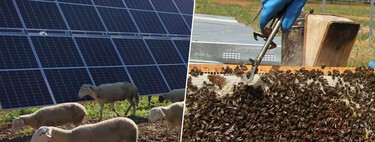
As global temperatures continue to rise, the urgency for renewable energy sources has intensified. The European Union has set a goal for 30% of its energy to come from renewables by 2030 to achieve climate neutrality by 2050. While wind energy plays a role, countries are increasingly turning to photovoltaics. However, the extensive space required for solar panels creates direct competition with farmlands. This is where agrovoltaics comes into play—a method that integrates solar panels within agricultural spaces without disturbing crop cycles, and it can even coexist with beekeeping and livestock farming.
Addressing Photosynthesis Challenges
The innovation developed by the University of Jaén aims to create solar panels that allow for efficient energy production while providing crops with the necessary light for photosynthesis. A recent study highlights this revolutionary technology. It focuses on two main parameters: average visible transmittance and photosynthetic transmittance, which dictate how much light reaches the plants after passing through the panels. Research indicates that crops function optimally when at least 60% of light reaches them.
Types of Transparent Panels
The solar panel industry is currently exploring various approaches to transparency:
- Non-Wavelength Selective Panels: These panels absorb a large portion of the solar spectrum and achieve transparency by modifying the material or leaving gaps, resulting in inadequate transparency.
- Wavelength Selective Panels: Designed to absorb ultraviolet and near-infrared radiation, these panels allow a significant amount of visible light to pass through, making them more suitable for crops.
Innovations from the University of Jaén
The researchers at the University of Jaén have proposed a unique system known as RearCPVbif, or “Bifacial Rear Concentrator Photovoltaics.” This design differs from traditional semi-transparent models by concentrating and directing reflected light toward the rear of bifacial cells. This method increases electrical production without compromising transparency, crucial for plant light exposure.
Potential Benefits and Next Steps
Co-author Álvaro Varela-Albacete points out that utilizing STPV technology and rear concentrators can lead to significant increases in energy generation without sacrificing the light plants require—aiming for that critical 60% transparency threshold for horticultural crops.
The study also emphasizes that temperature management is vital, with the cell temperature remaining below 70 degrees Celsius to prevent adverse effects on crops. As the researchers begin trials on real crops, this technology may greatly benefit intensive horticulture, especially in regions like Almería, where both agricultural and solar advancements are booming.
Overall, the integration of solar energy in agriculture not only addresses renewable energy needs but also enhances the multifunctionality of land use, paving the way for sustainable farming practices.