
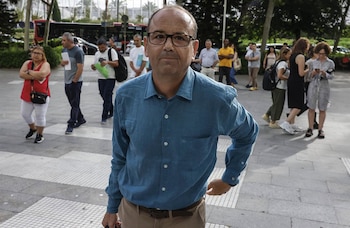
The Head of Climatology of the State Meteorology Agency (Aemet) in the Valencian Community, José Ángel Núñez , has emphasized the need for a comprehensive analysis of the emergency response system following the devastating storm known as DANA, which struck on October 29 . In an interview, he expressed the necessity to determine “what exactly failed” to prevent a recurrence of such a tragic event. With the recent loss of more than 200 lives , Núñez underscored that society must not accept this level of devastation as tolerable.
During his discussion on the program ‘ Les Notícies del Matí ‘ by à Punt, as reported by Europa Press , Núñez called for a detailed examination of the failures during the DANA incident. He specifically pointed to ongoing investigations, including the legal proceedings in Catarroja , which are looking into potential criminal responsibility . He warned that it is likely to rain heavily again in the future, but stressed that society cannot accept another tragedy of this magnitude. “In our society,” he stated, “it is something that is not acceptable.”
Despite the calamity, Núñez does not believe that the credibility of Aemet has suffered significantly. Referring to the supportive messages he has received via social media, he noted, “That has been the only positive thing I’ve had in recent months.” Nevertheless, he acknowledged the damage to the overall emergency response system. “We must analyze the system together,” he advised, insisting that 228 deaths present a notable failure in protecting lives and assets, which is one of Aemet’s primary objectives.
In discussing emergency services, he praised the Valencian Community for its exemplary response capabilities, stating, “They work excellently well and have managed crises successfully for decades.” He acknowledged the prestigious nature of these organizations and their technicians but criticized the overall system as needing improvement. Despite their efforts, he concluded that “emergencies have been successfully managed” for years without significant advancement since 20 years ago .
Núñez placed significant importance on the human factor in emergency management. While technology provides invaluable assistance in forecasting and data collection through advanced radar systems, he stressed that the ultimate decision-making must involve humans. “We are not yet in a situation where we can delegate all decisions to automation,” he asserted.
Reflecting on the day of the storm, he shared, “Now we know things that on the 29th we didn’t know.” He highlighted the advancements in risk management tools over the years, clarifying that relying on historical data alone is inadequate during emergencies. Nonetheless, he admitted that no amount of forecasting could have adequately predicted the extent of the rainfall, which surpassingly overwhelmed Turís and led to catastrophic results.
Moving forward, Núñez contended that taking early preventive measures and keeping the public informed is critical. He noted that while alerting the populace may sometimes result in no emergencies, having a reliable tool like science at their disposal indicates significant dangers should be taken seriously. He emphasized that the situation requires “more coordination” among various entities to prevent similar future catastrophes.
On a personal note, Núñez acknowledged the immense emotional toll taken on those managing the emergency response. During the first few months following the disaster, many questions arose about what could have been done to mitigate the impact of the storm. He voiced his frustration over being subjected to political scrutiny, despite being a technician focused solely on his duties and responsibilities.
Expressing his unwillingness to accept undue blame, he said, “From the first moment, I saw that I was not responsible for the situation that was generated.” His staunch refusal to shoulder the blame for the tragic events underscores the need for clarity in accountability within emergency management.
In closing, Núñez highlighted the surprising lack of communication between Aemet and the Civil Guard , pointing out that vital technical details about the weather were overlooked. This results in a clear call for collaboration across all levels of emergency management, ensuring that future strategies don’t overlook the contributions of meteorological experts like Aemet. Overall, he aptly summed up the need for a comprehensive reform in disaster preparedness and management.