
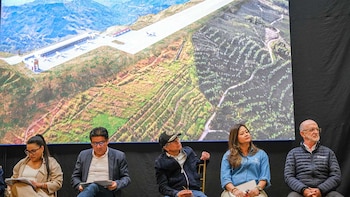
Transforming the Coffee Axis: The Launch of Café Airport
The National Government has kicked off a promising initiative with an investment of $828,423 million pesos for the construction of the new Café Airport in Palestine, Caldas. This ambitious project is poised to become a significant contributor to the region’s infrastructure and economic development, particularly within the coffee axis.
According to the National Planning Department (DNP), the launch of this tender represents a critical stride towards enhancing regional air connectivity. The initiative aims to not only bolster the local economy but also to narrow the historical gaps that have long affected this area. The terms of reference for interested parties are now accessible via the Public Procurement Electronic System, Secop II.
In an effort to ensure transparency and equal opportunity, authorities have signed the “Pact for Transparency and Plurality of the Public Procurement of the Air Side Tender of the Coffee Airport,” which is aimed at guaranteeing technical quality throughout the bidding process.
A Strategic Landmark for Regional Development
The construction of the coffee airport aligns with key objectives outlined in the Conpes 4140 document, which identifies the project as a strategic endeavor ensuring necessary resources and financial closure under the Plurianual Investment Plan. This project not only contributes to the National Development Plan 2022–2026 goals of improving transport infrastructure but also aims to enhance territorial equity.
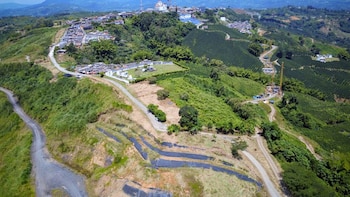
Strategically located just 26 km from Manizales, the new airport will significantly reduce travel times to other terminals, such as Matecaña in Pereira (59 km) and Eden in Armenia (110 km). This new facility will be equipped to accommodate ATR 72 aircraft, which can carry 78 passengers under varying conditions.
Infrastructure Details for Enhanced Connectivity
The project plans to construct a runway measuring 1,340 meters long and 30 meters wide, along with a safety strip measuring 1,460 meters by 80 meters. A 120-meter-long safety zone will be implemented at each end of the runway. The first stage of construction will also include necessary platforms for both commercial and general aviation, taxiways, and other essential infrastructure to ensure smooth operations in accordance with international standards.
Analysts project that the airport will positively influence tourism, estimating a 12% increase in visitor income to the coffee region. Furthermore, the airport is expected to streamline logistics for key exports, including coffee, confectionery, textiles, and appliances, which together account for 99% of Caldas’ non-mining energy exports.

The construction phase promises to create 2,987 direct jobs, and an estimated six jobs will be established for every thousand passengers transported. Such employment opportunities will invigorate the local economy by attracting investments and boosting essential sectors like tourism, commerce, and the knowledge economy. Notably, this effort will aid in reducing the multidimensional poverty index, which currently affects 13.9% of households in Manizales and a staggering 32.4% in rural areas of Palestine.
Addressing Limitations and Meeting Growing Demand
This project is geared towards overcoming the limitations posed by the existing La Nubia terminal, effectively addressing the growing demand for air travel. More than one million inhabitants of the coffee axis will benefit from efficient infrastructure capable of handling over one million passengers annually.
President Gustavo Petro recently emphasized the importance of strict transparency throughout the bidding process, ensuring high standards for all participants. To promote global engagement, specifications will be published in embassies and international media. The goal is to attract substantial proponents to guarantee fair conditions for all.

Minister of Transportation, María Fernanda Rojas, underscored the coffee airport’s potential as a catalyst for development and competitiveness, particularly for Caldas and southern Antioquia. The National Government is committed to delivering robust infrastructure that enhances community living standards, promotes territorial equity, and fosters the country’s productive development.
Overall, the operation of this new infrastructure is expected to unlock emerging tourism markets, specifically those related to nature, adventure, culture, and gastronomy. Additionally, it will support Caldas in establishing itself as a pioneering hub for education and technology, connecting well with initiatives like the Faculty of Artificial Intelligence.