
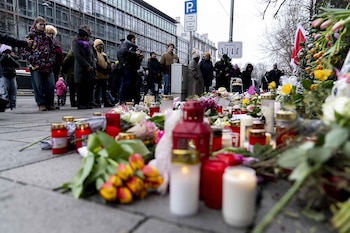
Tragic Events Unfold in Munich: An Afghan Man Accused of Multiple Murders
On Tuesday, the German Prosecutor’s Office announced shocking accusations against an Afghan man linked to a tragic incident in Munich that occurred in February. The man, alleged to have committed multiple murders, faces two counts of murder and 44 counts of attempted murder after deliberately driving a vehicle into a crowd. This appalling act happened during a protest for labor rights, coinciding with the lead-up to Germany’s general elections.
The prosecutor emphasized that the accused acted out of ” religious motivations ,” suggesting that this violent incident was a misguided reaction to perceived injustices faced by Muslims worldwide. According to the official statement, the Afghan man purposefully targeted random individuals , which underscores the senselessness of his violent act.
At 24 years old at the time of the incident, the defendant drove over demonstrators participating in a VER.DI union event, aimed at advocating for better wages and working conditions. The tragic consequences of this incident were amplified as two victims—a 37-year-old woman and her two-year-old daughter —succumbed to their injuries shortly after being struck by the vehicle. Along with them, an additional 44 people sustained serious injuries, highlighting the indiscriminate nature of the attack.
In the investigation that followed, authorities grappled with the apparent contradiction: while initial findings revealed no direct ties between the Afghan driver and any terrorist group , his actions clearly indicated a shift toward jihadist radicalization . The case developed further when a spokesperson from the Munich office addressing extremism and terrorism disclosed that the driver shouted “*Allahu Akbar*”—a phrase meaning “God is great”—immediately after the assault.
The defendant’s background adds another complex layer to this painful incident. Arriving in Germany as an unaccompanied minor refugee in late 2016, his asylum request was denied by 2020, resulting in an ordered departure from the country. However, in a surprising turn of events, he was granted a residence permit by Munich authorities in October 2021, raising questions about the local administrative processes that allowed such a decision.
Germany has become a focal point for debates about immigration policy and the integration of refugees into society. The tragic outcomes of this incident serve as an unsettling reminder of the challenges associated with radicalization in various communities. Moreover, the case has generated renewed discussions on whether existing laws and procedures adequately address the potential risks posed by individuals with troublesome backgrounds.
As the court proceedings move forward, the implications of this case are profound—not just for the victims and their families but for the entire society. It raises questions about how we can better protect the public from acts of violence motivated by extremist beliefs. Furthermore, it emphasizes the necessity for comprehensive measures aimed at identifying and countering radicalization before it manifests in tragic forms.
The Munich incident will undoubtedly remain a critical topic of discussion as Germany navigates the complexities of immigration and social cohesion . Community leaders, policymakers, and citizens alike must engage in dialogues on how to build inclusive societies while safeguarding against extremism. The case is not merely about one man’s actions but a reflection of broader societal challenges that need to be addressed with urgency and determination.