
The Current State of Agriculture Law in France
The agricultural sector plays a vital role in any nation’s economy and its corresponding policies can significantly impact farmers’ livelihoods. In France, a heated debate is currently underway regarding a new piece of legislation aimed at removing several regulatory burdens faced by farmers. The stakes are high, and the implications are manifold.
Overview of the Proposed Law
The proposed law, introduced by Senator Laurent Duplomb from the LR party, seeks to alleviate constraints on farmers. This effort is garnering considerable attention and is set to be examined by the French Parliament on May 26. The aim of the legislation is to streamline agricultural practices, potentially making it easier for farmers to operate without the restrictive regulations that have been in place.
The Pressure Mounts
Simultaneously, non-governmental organizations (NGOs) are raising alarms over environmental issues that could arise from such legislative changes. They argue that the relaxation of these constraints may lead to a dramatic decline in environmental protections. This concern has led to an inundation of messages directed at parliamentary offices.
A platform established by the Générations Futures organization, designed to facilitate communication between citizens and their elected officials, has reported over 130,000 appeals to legislators and political figures regarding this law. The significant public response underscores the urgency of addressing the environmental impacts of agricultural policies.
The Local Response
On the flip side, local federations of the FNSEA (National Federation of Agricultural Labor Unions) are taking matters into their own hands. They are actively engaging with parliamentary members, sometimes resorting to intense exchanges, in hopes of swaying them to support the proposed law. Their tactics have escalated to direct actions against parliamentary offices, including barricading and the dumping of manure as a form of protest.
These actions reflect deep-seated frustrations within the agricultural community, who feel under siege by regulations that they believe stifle their ability to conduct business effectively. The unrest is palpable, and it is clear that the agricultural sector is divided on the best course of action.
Violence and Intimidation Tactics
As tensions mount, instances of violent protests have also emerged. A notable incident occurred on May 16, when the Comité régional d’action viticole left a graffiti message stating, “Loi Duplomb, sinon boum!” on the office of LFI Deputy Sylvain Carrière in Hérault. Carrière has since announced plans to file a complaint, and the national assembly’s president, Yaël Braun-Pivet, has strongly condemned these acts of intimidation.
Such confrontations point to a broader issue within the agricultural community, where deep frustrations can lead to drastic measures. While many farmers believe that deregulation could assist their businesses, others are worried about the environmental ramifications.
Environmental Concerns
The environmental risks associated with agricultural deregulation are significant. NGOs argue that relaxing laws designed to protect the environment could lead to a surge in practices that jeopardize biodiversity, soil health, and water quality. Critics of the proposed law urge lawmakers to prioritize sustainable agricultural practices over short-term economic gains.
Freshwater resources are particularly vulnerable to agricultural runoff, and any move toward deregulation could exacerbate already critical issues in many regions. The complex interplay between agriculture, environmental stewardship, and economic viability creates a challenging landscape for policymakers.
The Economic Argument
On the economic side, proponents of the law assert that deregulation is essential for enhancing the competitiveness of French agriculture, particularly in the face of fierce global competition. By lifting regulatory burdens, they argue that farmers will be able to innovate and respond to market demands more effectively.
The argument centers on the idea that a more relaxed regulatory environment will enable farmers to increase productivity and profitability, thereby reducing the agricultural crisis that many face today. However, this raises the question of whether such practices can occur without harming the environment.
The Road Ahead
As the debate continues, both sides remain entrenched in their positions. Farmers and their representatives urge lawmakers to consider their livelihoods, arguing for the necessity of their proposed measures, while environmentalists caution against compromising ecological standards.
Lawmakers have a crucial decision to make in the coming days. The outcome will not only affect farmers in France but also set a precedent for agricultural policy within the European Union and beyond.
The discussions surrounding the proposed law will ultimately determine the future of the agricultural sector in France, balancing the pressing need for economic sustainability with the equally important call for environmental protection.
Ça chauffe dans tous les sens. Dans leur boîte mail et devant leur permanence. Les députés, qui doivent commencer, ce lundi 26 mai, l’examen de la proposition de loi du sénateur LR Laurent Duplomb «visant à lever les contraintes à l’exercice du métier d’agriculteurs», sont sous pression. Les ONG, qui alertent sur un recul environnemental sans précédent, inondent leurs messageries. Une plateforme, créée par l’association Générations futures, dénombrait dimanche plus de 130 000 interpellations d’élus et de responsables politiques.
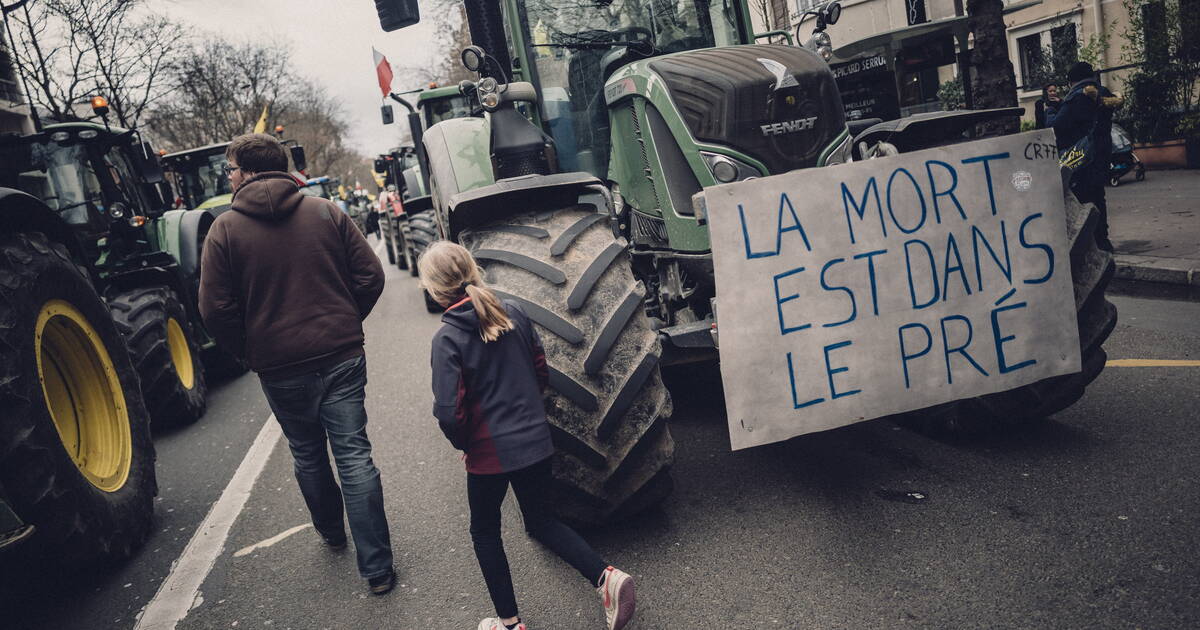
De l’autre côté, des fédérations locales de la FNSEA, qui multiplient les échanges – parfois musclés – avec les députés pour les inciter à voter en faveur de la proposition de loi, s’en sont pris à plusieurs locaux de parlementaires, à coup de permanences bâchées et de fumier déversé. Le Comité régional d’action viticole, familier des actions violentes dans le Languedoc, s’est quant à lui fendu, le 16 mai, d’un tag «Loi Duplomb, sinon boum !» sur la permanence de l’élu LFI de l’Hérault Sylvain Carrière, qui a annoncé porter plainte. La présidente de l’Assemblée nationale, Yaël Braun-Pivet, a «condamné fermement» ces «tentatives d’intimidations». La FNSEA brandit pourtant la menace de ressortir les tracteurs dès lundi et organisera un rassemblement devant