
The Fall of Saddam Hussein: A Chronicle of Captivity
Discovery of Saddam Hussein
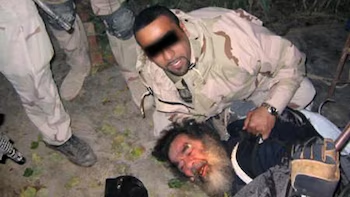
On December 13, 2003, Iraqi dictator Saddam Hussein was captured, marking a pivotal moment in a U.S. military operation that began with the invasion of Iraq in March of the same year. After months of evasion, Hussein was found near Tikrit, concealed in a rudimentary underground shelter. His capture followed a dramatic narrative of suspense that held the world captive.
Prelude to the Invasion
The U.S. invasion of Iraq was framed around the need to dismantle supposed weapons of mass destruction and to end Saddam Hussein’s alleged support for terrorist networks. As U.S. forces advanced towards Baghdad, they faced minimal resistance from the Iraqi military, yet Hussein’s capture—or elimination—remained a crucial objective that eluded them for months.
President George W. Bush detailed these aims shortly before the invasion, asserting that the goal was to liberate the Iraqi people from Saddam’s regime. Despite initial U.S. advances, capturing Hussein became a haunting challenge, especially after the swift fall of Baghdad.
The Hunt for Hussein
Hussein’s ability to remain at large contributed to growing fears among U.S. military leaders. They believed that his evasion emboldened insurgent movements and complicated forces aiming to restore order. Inspections of the lavish presidential properties failed to yield any leads, and whispers circulated regarding his possible death or injury, but no evidence confirmed these rumors.
The situation escalated when U.S. special forces killed Hussein’s sons, Uday and Qusay, in Mosul in July 2003, highlighting the importance the U.S. government placed on capturing the former leader.
The Capture Operation: “Red Dawn”
Months of strategic intelligence gathering and escalating pressure on Hussein’s relatives finally narrowed his hideouts. On December 13, American soldiers located him residing on a farm near Tikrit. The operation, dubbed “Red Dawn,” resulted in his apprehension without resistance; he was found armed, yet entirely unprepared for an altercation.
This arrest stunned many, as the image of Saddam Hussein had long symbolized power and authority. His disheveled appearance contrasted starkly with his previous public persona, which had been projected through state-controlled media.
Aftermath: Interrogations and Trial
Hussein was held and interrogated for over a year, during which time he revealed that his stockpiles of weapons of mass destruction had long since been destroyed, and he had no capacity to manufacture them. Hussein repeatedly denied any ties to Al-Qaeda, labeling its leader, Osama Bin Laden, as a fanatic.
In June 2005, custody transferred to the Iraqi judicial system, leading to a trial that exposed extensive human rights abuses committed during his regime. His leadership ultimately ended when he was found guilty of crimes against humanity by the Iraqi Supreme Court.
Execution and Legacy
Saddam Hussein was executed by hanging on December 30, 2006, at Camp Justice in Baghdad. The reaction in Iraq was mixed: while many celebrated the end of his rule, others viewed the trial and execution as mere extensions of U.S. influence.
The capture and subsequent trial of Saddam Hussein represented a critical juncture in Iraq’s tumultuous history, influencing the geopolitical landscape for years to come. The widely televised proceedings of his trial testified to the complexities of justice in a nation marred by conflicts and shifting loyalties, while the ongoing challenges of insurgency continued to plague Iraq long after his fall from power.