
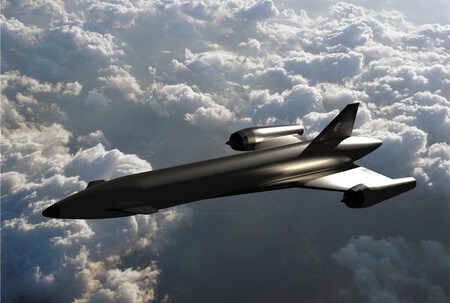
Just a couple of decades ago, the idea of taking off from a conventional runway and flying five times faster than sound seemed reserved for science fiction . Today, the European Space Agency (ESA) aims to pave that path with Invictus , an experimental hypersonic platform that could transform how the old continent accesses space.
Invictus is neither a missile, nor a military plane, nor a vertical launcher. It is an aircraft concept designed to fly to Mach 5 , take off horizontally, and return to the ground intact for reuse. Its modular structure allows for the exchange of materials, motors, and software, enabling the testing of various configurations throughout multiple campaigns.
The program is funded through instruments such as the General Support Technology Programme (GSTP) and the Element of Technological Development (Tde) of the ESA. The key objective is to provide Europe with a technological base in a field that is predominantly controlled by the United States and China.
The Great Enemy is Not Speed: It is the Scorching Temperature
Reaching Mach 5 involves more than just engine power. The great obstacle is thermal; friction against the fuselage causes external temperatures to soar to extreme levels , converting incoming oxygen into a gas that cannot be compressed or used directly.
To combat this, Invictus will utilize an early hydrogen-fed engine , featuring a thermal exchanger capable of cooling air at over 1,000 °C in mere milliseconds. As David Perigo, chief engineer of ESA, states, “It will provide an invaluable opportunity to test the complete engine flow path, from air intake to the afterburner, at full scale in an integrated aircraft.”
Technology does not start from zero. Reaction Engines has developed SABRE , an atmospheric-orbital hybrid engine that, in its time, was supported by the ESA. After the company entered administration in 2024, part of its team and intellectual property transferred to Frazer-Nash , which now brings that know-how to Invictus. This pivotal transfer marks the first integration of laboratory tests into a complete and reusable aircraft, a critical step toward the establishment of European space aircraft.
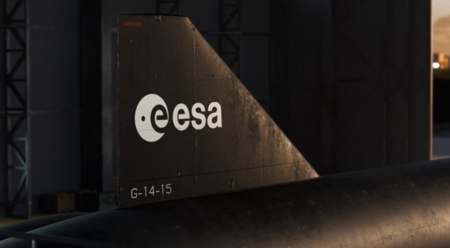
The strategic implications are clear: if Invictus proves viable, Europe could move towards orbital planes that can perform both civil and military missions with speed and flexibility that can rival conventional vertical rockets .

The consortium, led by Frazer-Nash , which includes partners like Spirit Aerosystems and Cranfield University , has 12 months and 7 million euros in initial funding to deliver the complete preliminary design of the vehicle. This is an indispensable step before planning flight testing campaigns. According to the internal timeline, a first demonstration flight is scheduled around 2031 .
While the United States and China vie for dominance in hypersonic flight , Europe does not intend to remain on the sidelines. With Invictus, Europe sends a clear message: the continent aims to devise the future of space access on its own terms.
Images | ESA | Frazer-Nash
In essence, Invictus signifies a groundbreaking leap into the realm of hypersonic travel, and its success could herald a new age of European capabilities in both commercial and defense sectors. With its unique design and innovative technology, the Invictus program encapsulates Europe’s ambition to excel in the dynamic field of aerospace technology .