
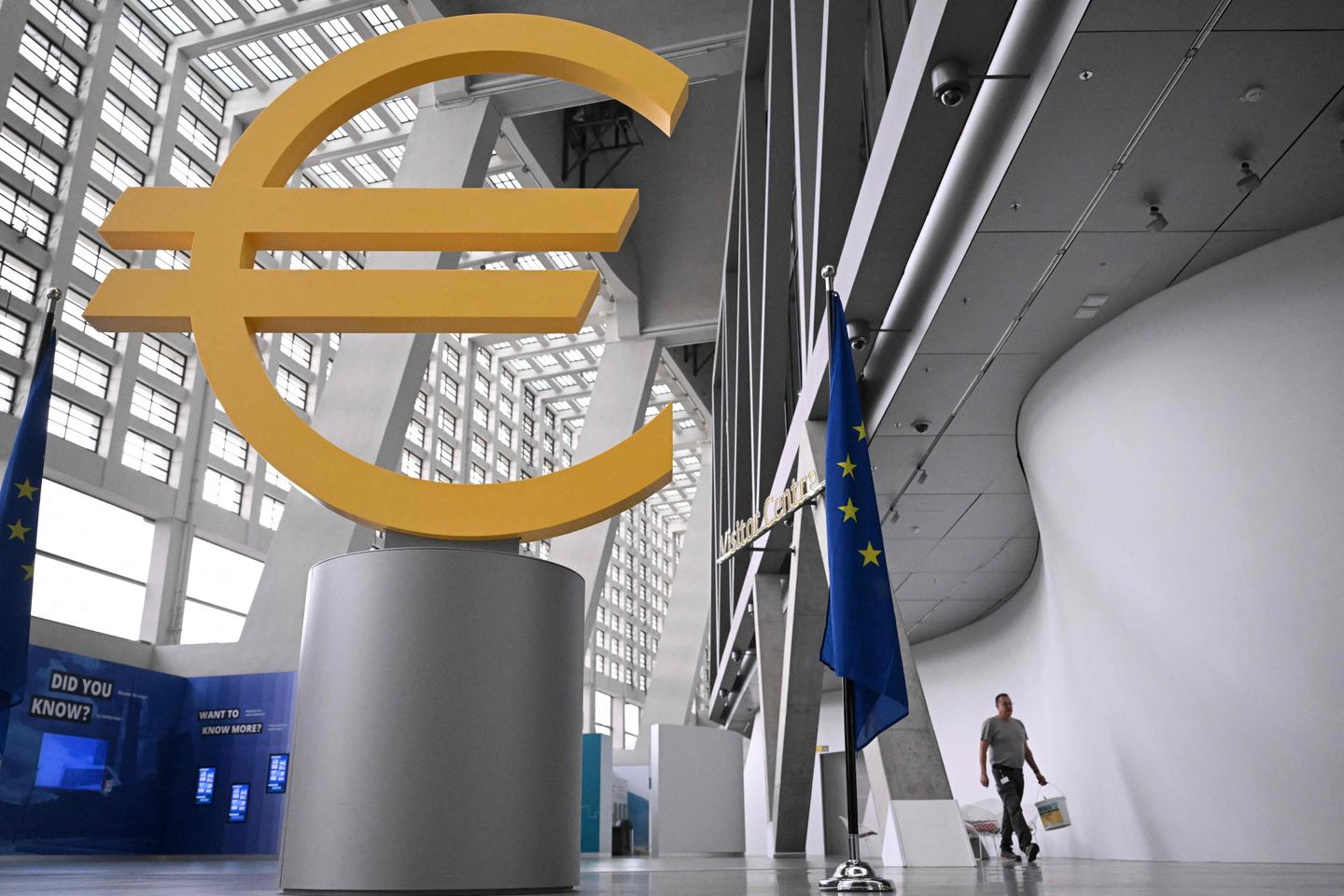

On June 5, 2025, the European Central Bank (ECB) announced another interest rate cut , marking the eighth reduction in just a year. This move comes amid growing uncertainties fueled by Donald Trump’s trade tariff threats and their potential impact on inflation and growth in the Eurozone. The ECB reduced its key deposit rate by a quarter point to 2% , a level it no longer perceives as detrimental to the economy.
Since June 2024, a decline in inflation within the Eurozone has allowed the ECB, headquartered in Frankfurt, Germany , to ease rates, reversing a tightening cycle initiated two years earlier to combat soaring prices, which had previously driven the deposit rate to a historical peak of 4% .
This latest reduction, the seventh consecutive decline since last September, comes as the ECB noted, “current inflation is hovering around our target” of 2% .
Concerns have shifted towards the persistent weakness in economic activity across the twenty countries of the Eurozone, where a slump in demand could potentially lead to deflationary pressures . The ECB remarked that “uncertainty regarding trade policies” might temporarily stifle investment and exports, although a surge in public investment and the robustness of the labor market are expected to support growth and consumption, effectively making the economy more resilient to global shocks.
The most significant threat appears to stem from President Donald Trump , who has been aggressively vocal against the substantial trade surplus the Eurozone enjoys with the U.S. His ultimatum, which includes the potential for 50% tariffs on European goods, is set to expire on July 9 .
Earlier, Washington raised tariffs to 50% on steel and aluminum imports from Europe, a move described as “deeply regrettable” by Maros Sefcovic , the European Commissioner, who highlighted that such measures complicate ongoing negotiations between the two trade blocs.
Revised Inflation Projections
“In light of the current exceptionally uncertain environment,” the ECB intends to respond based on data , evaluating situations “ meeting by meeting ,” as indicated in a recent statement .
Data collected since the last meeting in April confirm the decisions announced on Thursday: inflation in the Eurozone fell to 1.9% in May, significantly slowing down and remaining below the ECB’s 2% target . This decline is primarily attributed to eases in energy prices. Even when excluding energy and other volatile food prices, underlying inflation also eased to 2.3% year-over-year in May, down from 2.7% in April.
For 2025, the ECB has reduced its inflation forecast to meet its target of 2% , down from the previous estimate of 2.3% . This indicator is expected to drop to 1.6% in 2026 and then reach 2% once again in 2027.
The ECB also pointed out that wage growth “ remains strong but is gradually showing signs of attenuation,” alleviating fears of “second-round” effects on prices. On Thursday, the ECB released new macroeconomic forecasts intended to provide insights into the future of its monetary policy.
Additionally, the institution in Frankfurt has revised downward its economic growth outlook for 2026 . The Eurozone’s GDP is projected to grow by 0.9% in 2025 , consistent with the estimate provided in March. However, growth is only expected to increase to 1.1% next year, as opposed to the previous projection of 1.2% , primarily due to the uncertainties surrounding the tariffs imposed by President Trump.
The series of interest rate cuts in the Eurozone stands in stark contrast to the position of the U.S. Federal Reserve , which continues to maintain rates above 4% , expressing concerns that Trump’s policies may reignite inflation in the United States.
The ongoing dynamics in the European economic landscape are increasingly complicated as the ECB navigates through fluctuating inflation and potential trade disruptions, indicating a need for ongoing vigilance and responsive policy measures. It remains to be seen how global economic tensions will further influence both local and international markets in the months to come.