
The Arctic’s Melting Mystery: A Prehistoric Whale Graveyard
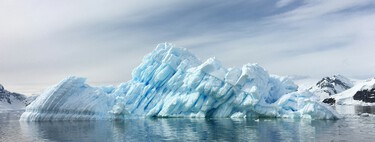
The Arctic is melting at an alarming rate, revealing hidden wonders beneath the ice. Recent discoveries have unveiled an extraordinary prehistoric cemetery of whales, exposed by the retreat of a glacier over the past two decades. This finding has drawn the attention of researchers and the media alike, reminiscent of a scene straight out of a fictional novel.
An Unexpected Discovery
An expedition from the Arctic and Antarctic Institute of Russia (AARI) initially aimed to study permafrost in the region. However, the researchers were met with an astonishing surprise. As detailed by researcher Nikita Demidov, satellite imagery and on-site measurements confirmed that a significant local glacier had split dramatically within a mere 20 years. This fracture uncovered a marine terrace concealed beneath the ice, revealing a remarkable concentration of whale skeletons.
Thanks to their burial under the ice, these ancient remains have been exceptionally preserved, offering a rare glimpse into a bygone era. The preservation intact amplifies the importance of this discovery for scientists studying the region.
Understanding the Context of the Cemetery
Experts believe that the presence of this whale graveyard is not mere coincidence. It serves as a critical record of historical extreme paleographic events, shedding light on rapid sea-level changes that transpired thousands of years ago. This cemetery enables researchers to piece together significant shifts in Earth’s climatic history.
Supporting this notion, extensive literature exists on the subject. A notable study conducted back in 1995 examined the post-glacial emergence in the western area of Franz Josef Land, utilizing radiocarbon dating, revealing the age of these remains to be roughly 10,400 years old.
The Warming Trend
The swift decline in glacial masses observed by Demidov aligns with recent findings in scientific literature. A 2025 study published in the Journal of Glaciology analyzed the balance of glacier masses in the archipelago from 1991 to 2022, confirming a concerning acceleration of melting linked to climate change. This correlation serves as a stark reminder of the ongoing environmental shifts affecting our planet.
A Call for Caution
While the discovery generates considerable excitement, the scientific community urges caution. The data currently stems from an institutional statement by AARI, and no peer-reviewed academic article has been published specifically addressing these findings. Therefore, it’s essential to maintain a critical perspective until further verification is achieved.
The next phase for Demidov and his team involves analyzing the bones in the laboratory, establishing precise dating, and ultimately sharing their conclusions with the global scientific community. Until then, the whale cemetery on Wilczek Island stands as a silent yet monumental witness to the sudden shifts in Earth’s landscape—both historic and contemporary.
As we continue to explore the Arctic’s secrets, this remarkable discovery reminds us of the fragility of our environment and the importance of understanding the changes we face.
Images | Pascale Amez
In addition to the whale cemetery discovery, researchers are equally intrigued by other phenomena in Arctic regions, such as a “beating” glacier observed in the remote Svalbard archipelago—a topic that continues to intrigue and bewilder scientists alike.