
The 1950 English Football Catastrophe: A Humbling Experience
In 1863, England pioneered the game of football and spread it worldwide alongside its railways. However, by the time FIFA was established in 1904, the English were reluctant to engage with what they deemed “upstarts”. After some back-and-forth, they finally joined FIFA in 1906, aiming to include football in the 1908 London Olympics. Yet, disagreements over definitions of amateurism and political motivations caused them to withdraw several times, notably after the World Wars.
The Road to Brazil 1950
After years of tumult and multiple withdrawals from international competitions, England rejoined FIFA in 1946. The nation sought to re-establish itself in the global sporting arena, culminating in its participation in the 1950 World Cup in Brazil. England was now viewed as the epitome of football, and their return was seen as an end to the supremacy held by other nations.
A Golden Team with High Hopes
The so-called “Golden Team” of England was renowned, boasting talent like Matthews, Mortensen, Lawton, Mannion, and Finney. Despite their formidable record in friendlies—including a stunning 4-0 victory over Italy—they arrived in Brazil brimming with confidence. A significant setback was the absence of defender Neil Franklin, who defected to a rival league in Colombia.
Facing the challenges of travel, they journeyed through multiple countries to reach Rio de Janeiro, struggling with the cultural disparity and unfamiliarly of Brazilian cuisine. Despite their high expectations, their World Cup experience began with caution.
Underwhelming Performances
England’s first match against Chile on June 25, 1950, at the newly inaugurated Maracanã Stadium ended in a modest 2-0 victory. The performance was lackluster, failing to excite the crowd of 80,000 spectators. English optimism took a dramatic hit during their next match against the United States just four days later.
The Shocking Defeat to the USA
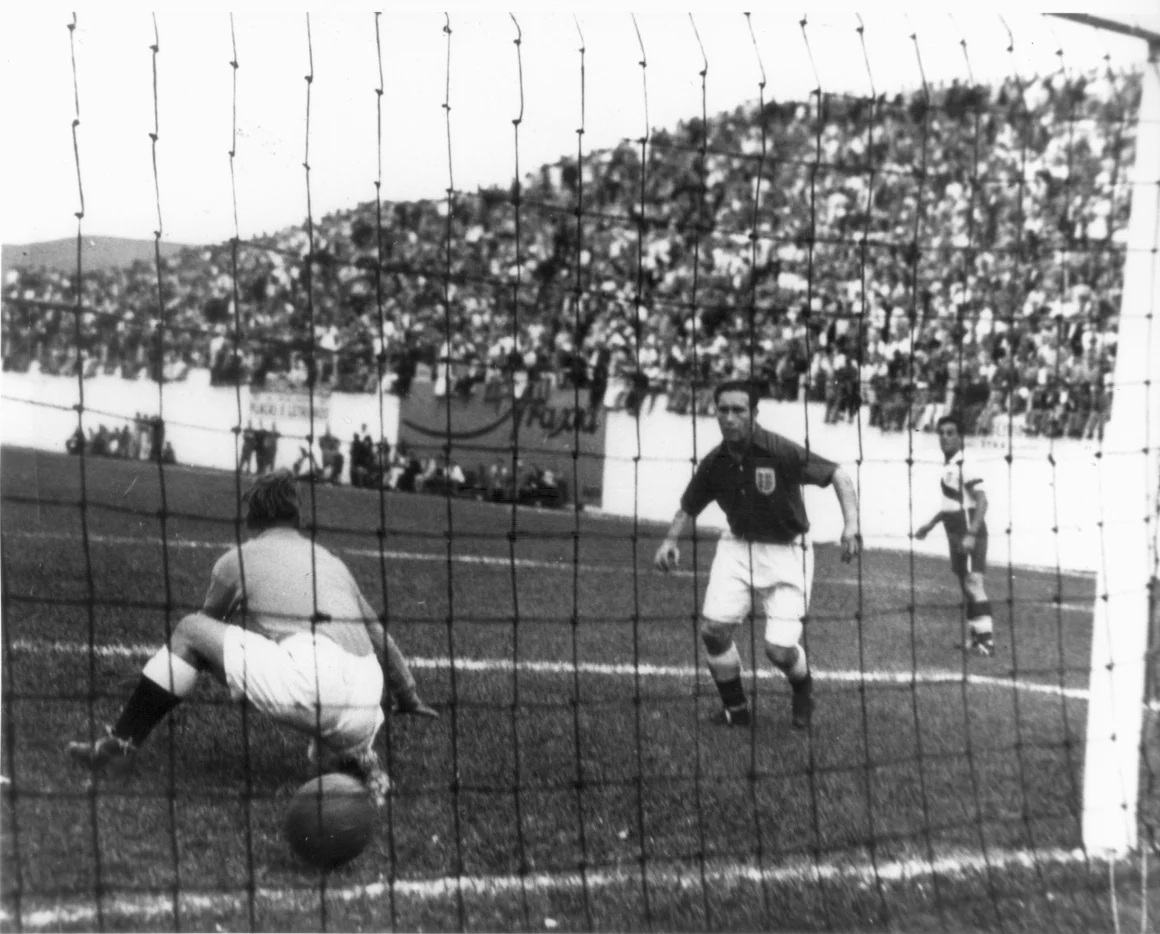
On June 29, 1950, England faced the United States. To everyone’s shock, they lost 1-0, marking one of the biggest upsets in World Cup history. The lack of English urgency and their reliance on predictable tactics allowed the American team to succeed. The lone goal was scored by Joe Gaetjens, a Haitian player who had not even attained U.S. citizenship. The game shocked the world and left England reeling.
The Aftermath: Back to the Drawing Board
With England’s early exit from the tournament after losing to Spain, the footballing landscape began to shift. The humiliating failure prompted the Football Association to rethink its approach. Reports humorously lamented the death of English football in Rio, prompting coaches to acknowledge that the game had evolved while they had remained stagnant.
Winterbottom, England’s coach during the tournament, stated that “the old masters need to go back to school.” This marked a turning point, leading to significant changes in English football strategies, ultimately paving the way for their victorious return in 1966.
Conclusion
The 1950 World Cup served as a critical lesson for English football—a humbling experience that compelled them to adapt and improve. Rather than being the invincible footballing authority they once believed themselves to be, they faced the harsh reality of competition and evolution in the beautiful game.