
Faced with criticism from the public and the press, director Christopher McQuarrie has defended his artistic choices for Mission Impossible 8 – The Final Reckoning, a film that has sparked considerable debate.
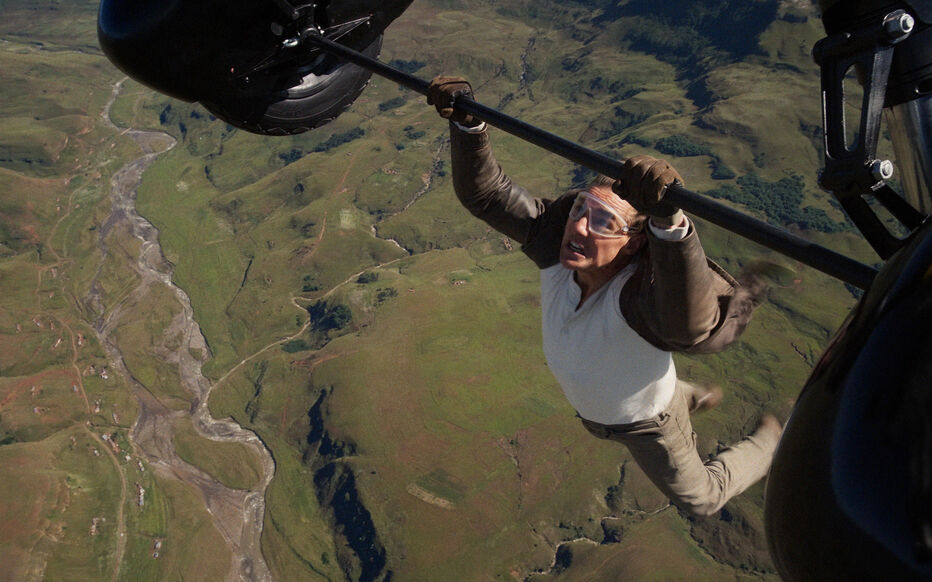
It takes more than breathtaking stunts to elevate a film. Despite featuring dizzying action sequences performed by Tom Cruise—who seems to defy the laws of gravity—Mission: Impossible 8 – The Final Reckoning has struggled to elevate itself at the box office. Marketed as the grand finale of Ethan Hunt’s saga that started in 1996, the eighth installment has not quite achieved the expected takeoff, with its box office performance underwhelming.
Nearly three weeks post-release, the film has grossed only $450 million worldwide, a modest figure for a $400 million blockbuster budget, especially overshadowed by the success of the live-action remake of Lilo & Stitch. The critiques have varied, citing everything from an overly complex plot to a serious tone, but one critique seems to have struck a nerve with McQuarrie: the claim that the film is “too talky.” The director felt compelled to respond.
Mission Impossible: The Need for Dialogue
In an interview with MovieWeb, Christopher McQuarrie candidly addressed what many viewers perceive as one of the film’s significant flaws: its tendency to over-explain plot points through lengthy dialogues. According to McQuarrie, he believes that the film strikes a balance between exposition and action .
“The goal is to make the film feel fluid. There is always this dilemma: when is there too much exposition, and when is there not enough? I think we found a happy medium. But listen, I would dream of making a film without any dialogue.”
Referring to previous entries in the franchise like *Rogue Nation* and *Fallout*, McQuarrie suggested these films can be understood purely through musical cues , almost as silent films. “Take the mission briefing in *Fallout*: ‘Good evening, Mr. Hunt.’ It’s so much more captivating without dialogue,” he stated.
Viewing Preferences and Audience Expectations
McQuarrie argues that these lengthy exposition sequences are not indicative of writing failure but signify an inevitable evolution in cinematic language due to the decreasing attention spans of audiences. He insists that blockbusters now must preempt any confusion to avoid losing any dramatic tension.
“Everything we do, we do for the audience—every piece of information, every bit of exposition, every flashback is there to relieve them from the effort of focusing on the film. We don’t want this to be a chore; we want it to be an experience.”
McQuarrie’s comments highlight the challenge faced by filmmakers today—they often grapple with the balance of pacing and length, seeking to cater to diverse global audiences who may not share the same cultural context or language proficiency.
Although McQuarrie insists on the integrity of his artistic vision, it feels at times that the eighth installment of Mission Impossible strives to address the past rather than focus on the present or future. Although Tom Cruise’s physical performances continue to impress, they now seem burdened by the weight of imposing mythology.
In conclusion, while McQuarrie defends his choices, it is evident that this installment is less a triumphant farewell and more an intricate exercise in connecting eight films into one coherent narrative. However, this coherence seems to have cost the film the spontaneity that audiences have come to cherish in the franchise. Mission Impossible 8 – The Final Reckoning has been in French theaters since May 21, 2025.