
Exploring the Dacia Spring: The Most Affordable Electric Car
Imagine being able to own a fully electric car for less than €9,000 . The Dacia Spring stands out as the most affordable 100% electric model available today, especially if you can take advantage of the current public subsidies. But while the price tag might be appealing, how does it actually perform in real-world conditions? Mario Arroyo, our colleague, tested the Dacia Spring for an entire month, without a garage or home charging point, navigating both city and intercity routes. What’s its consumption like? How does it handle different driving scenarios? Who would truly benefit from such a vehicle? Mario provides in-depth answers to all of these questions.
You can watch the full video on the Xataka YouTube channel, where he meticulously documents his experience. From day one, he used the Dacia Spring as his primary vehicle, tackling real-life commutes to work, trips to the airport, grocery shopping, and even weekend getaways around and outside Madrid. “The purpose of this video is to explore what it feels like to have a 100% electric car designed for urban use in 2025,” he explains. He tested it under various conditions, noting both its limitations and advantages .
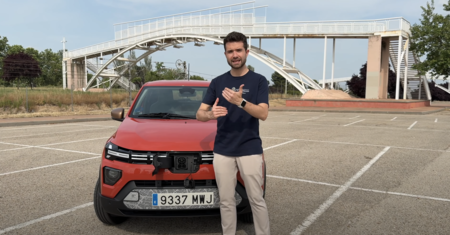
The Dacia Spring isn’t designed for luxury but offers practical features. Mario tested the Extreme version equipped with a 48 kW electric motor, approximately 65 HP , and a usable battery of 26.8 kWh , which, according to the manufacturer, provides a range of 220 km . “While it may not accelerate the fastest among electric vehicles on the market, it performs adequately for overtaking or quick maneuvers, especially on highways and ring roads,” Mario states.
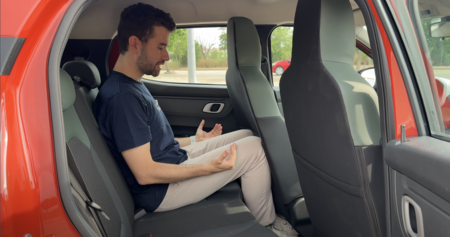
However, the experience changes significantly when you leave urban environments. On highways or ring roads, the Spring reveals its limits. “When turning the steering wheel, you feel a slight zigzag, almost as if the car wobbles a bit,” says Mario. At speeds of 100 or 120 km/h , the lack of stability becomes noticeable, potentially affecting driver confidence. Nonetheless, he assures that for short, everyday trips, he encountered no major issues. The video discusses this aspect in detail.
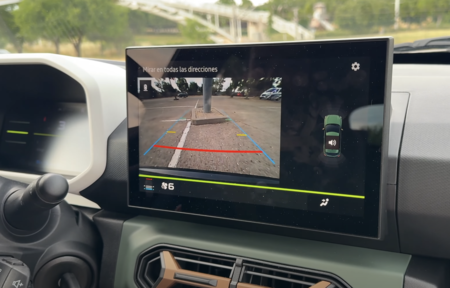
Another major challenge was the charging process . Lacking a home charging point, Mario relied entirely on public stations, each presenting its unique advantages and frustrations. “ It’s not the simplest process in the world, honestly ,” he shares, using apps such as Electromaps to locate available charging points. He experienced a mix of slow charging, out-of-service stations, and limited power availability, revealing both the strengths and weaknesses of the current charging network in Spain.
After nearly a month of use, the video breaks down all trips, consumption rates, charging times, and costs, presenting a direct comparison with gasoline cars. “For short, regular trips, I believe it’s the way to go,” Mario asserts. However, this conclusion comes with specific conditions: having access to home charging, not needing to make long-distance trips, and being okay with a simple construction focused on the essentials. Is the Dacia Spring the definitive urban electric vehicle or merely a stepping stone on the journey towards a greener future? Find out in the latest video posted on Xataka’s YouTube channel.
Images | Xataka
In Xataka | China has taken the next step to dominate the electric car industry: investing in proprietary chips.