

Amazon has long been notorious for its stringent surveillance of workers. This distrust has manifested in various technologies developed to monitor employee performance , from wristbands that track relaxation levels to advanced AI systems that evaluate productivity rates. Many stories have arisen from this environment, revealing that some workers have resorted to urinating in bottles to avoid wasting time—an alarming testament to the company’s rigorous monitoring. In some employees’ perspectives, the demanding atmosphere is akin to being “in a prison.”
Most notably, Amazon has faced backlash for using AI cameras to monitor delivery routes in real-time, leading to fines due to invasion of privacy. After criticism regarding an algorithm that docked workers for taking bathroom breaks, the company was compelled to adjust its tracking systems. This level of oversight, coupled with concerns over employee well-being, has sparked a widespread debate about work conditions in the digital age.
Augmented Reality Glasses: Enhancing Delivery Operations
Amazon is now exploring augmented reality (AR) technology to further integrate into its delivery operations. Following the trends set by products like the Meta Ray-Ban Display, Amazon is reportedly developing AR glasses tailored specifically for its delivery personnel. These glasses are designed to improve the efficiency of couriers by providing real-time information about deliveries.
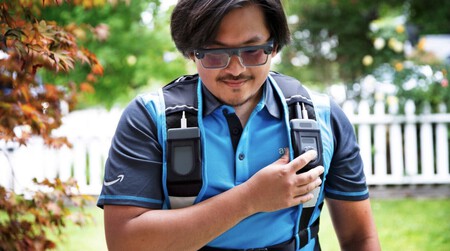
After delivery, the courier will take a photo to confirm the delivery.
According to an official Amazon press release, the AR glasses will enable couriers to “ identify dangers, navigate customer locations , and improve delivery outcomes.” Equipped with AI, camera technology , and sensors, this advanced gadget will provide crucial information to drivers, enhancing their operational capabilities.
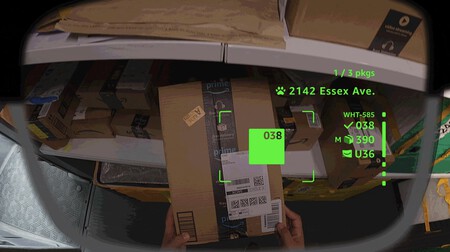
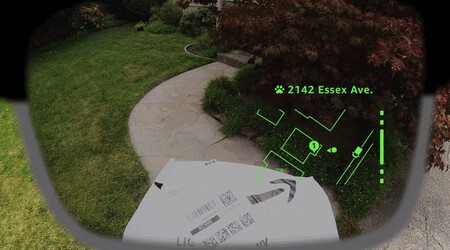
When couriers arrive at a designated location, the glasses will provide real-time delivery details through a heads-up display (HUD), showing essential information in a streamlined format. This HUD will also assist in navigational guidance similar to GPS systems but with a more simplified user interface, optimizing the delivery process. Once packages are delivered, couriers can easily take confirmation photos, which can be useful in dispute scenarios.
Potential for Increased Worker Surveillance
While these glasses seem to enhance courier efficiency, they inevitably raise concerns regarding worker surveillance . During its testing phase, Amazon is continuously gathering data and feedback from hundreds of testers. However, the glasses’ capabilities extend beyond aiding deliveries; they also provide Amazon with a relentless mechanism to track courier productivity and monitor their locations closely.
This intricate data collection raises red flags about privacy and the extent to which Amazon can scrutinize its employees. The fine line between utilizing technology for efficiency and invading personal work liberties remains a significant concern as workers may feel increasingly watched. If these glasses become a standard practice, the implications for employee privacy could be dire.
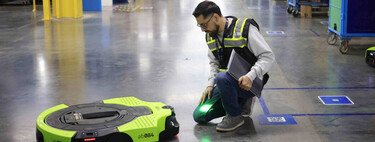
Moreover, the implementation of such wearables may not face the same feasibility in regions governed by strict labor laws. The European Union has previously established legal precedents that could significantly restrict surveillance through wearable technology. These laws may serve as a barrier to Amazon’s desire to incorporate augmented reality devices into standard operating procedures globally, raising important ethical questions about the future of work in a technology-infused era.
In conclusion, while the promise of augmented reality presents exciting possibilities for improving delivery efficiency at Amazon, it also opens the door to unprecedented surveillance practices. As Amazon continues to tread this fine line, employees and consumers alike must critically assess the balance between productivity enhancements and privacy infringements in the workplace.