
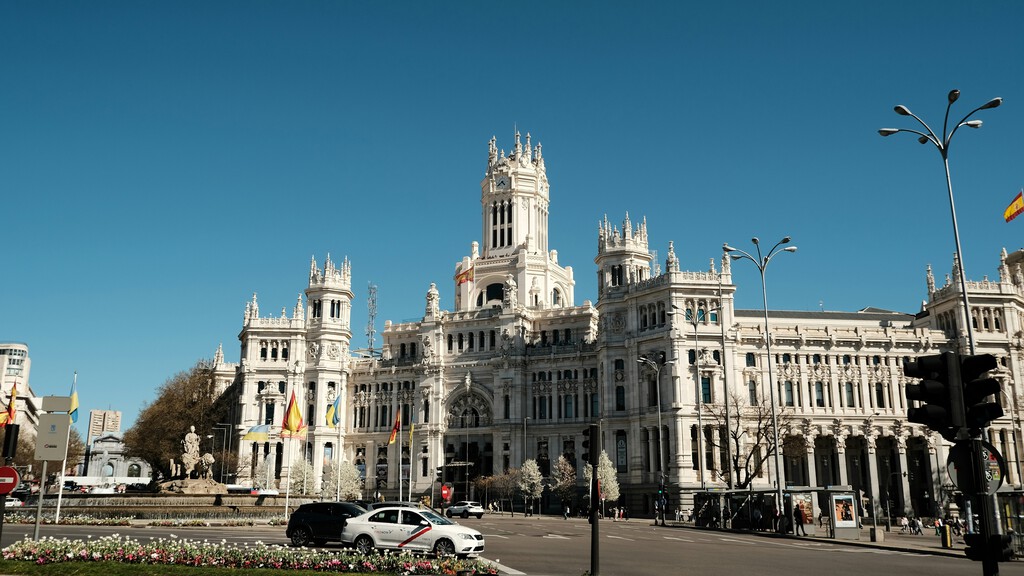
The Rise of Madrid as Spain’s Financial Capital
Over the last decade , Madrid has transformed into the epicenter of money in Spain . This vibrant city not only hosts the headquarters of major companies and banks but has also become a magnet for both national and international fortunes . Madrid’s welcoming atmosphere for the wealthy is largely attributed to its favorable tax policies and an environment conducive to business growth.
According to a recent study by Fernando Rodrigo Sauco from the University of Zaragoza, 41.9% of taxpayers with assets exceeding three million euros reside in the Community of Madrid, which starkly contrasts with 22% in Catalonia. This data unveils a clear trend: Madrid is becoming a tax shelter within Spain, significantly attracting the wealthy.
This high-net-worth migration trend isn’t a new occurrence, but it has certainly intensified in recent years. Since 2011 , thousands of affluent individuals have relocated their tax residency to Madrid, underscoring the city’s financial allure . The combination of permissive tax policies and the vibrant business atmosphere has played a pivotal role in this shift.
The primary reason for the concentration of millionaires in Madrid is its favorable tax policies for high-net-worth individuals and the network effect of living in close proximity to significant business and financial activities. What initially began as a modest tax differential has evolved into a geography of wealth in Spain, making Madrid the first choice for those with considerable financial resources.

64% of Spaniards believe that they pay more in taxes than they receive from the State. It’s actually the other way around
The data also suggests that 58.3% of the top 1% of earners in Spain live in either Madrid (at 32.51% ) or Catalonia (at 25.8% ). Other regions such as the Valencian Community and Andalusia account for a smaller portion, with 9.76% and 6.71% of the nation’s wealthy population, respectively. As one drills down to the ultra-rich – the top 0.1% – the concentration becomes even more apparent, with 68.59% residing in either Madrid or Catalonia.
In fact, among the ultra-rich, Madrid boasts 41.9% of this elite demographic, while Catalonia’s representation stands at 26.69% . The lesser representation in other communities, such as the Valencian Community (8.2%) and Andalusia (6.31%) , highlights a pronounced wealth gap within Spain, emphasizing the unprecedented economic polarization occurring in these regions.

Tell me where you live and I will tell you how much money you have: this is how wealth is distributed in the neighborhoods and municipalities of Spain
The study also explores the concept of migration elasticity , which assesses the likelihood of billionaires relocating if certain taxes, like the wealth tax , were adjusted. For instance, would an increase or decrease of 1% in tax impact their decision to stay? The findings suggest that taxation is a major factor, often outweighing other elements such as family connections , roots , and public services .
Up until 2023 , Madrid offered a 100% bonus on the wealth tax, effectively allowing exceptionally affluent residents not to pay this tax, while other regions implemented rates of up to 3.5% on net assets. Additionally, Madrid’s relatively lower personal income tax in higher brackets and the absence of inheritance tax on direct inheritances compounded the decision for many wealthy individuals to move to the capital.
The outcome of this tax-friendly policy has been noteworthy: Between 2011 and 2015 , over 6,000 wealthy individuals relocated to Madrid. This trend persisted over the following decade; however, a significant change emerged in 2023 with the introduction of a temporary solidarity tax on large fortunes. Initially conceived to eliminate double taxation, this new approach places more financial burden on the affluent in Madrid and Andalusia, challenging the city’s previous allure.
Consequently, data indicates that 27.6% of large fortunes paid the wealth tax in 2022 , a figure that surged to 99% in 2023 . This dramatic increase signifies a dilution of the long-standing tax advantage that bolstered Madrid’s status as the hub for the wealthy. As Spain navigates this new financial landscape , the future of capital concentration in Madrid remains uncertain.