
A robot that walks around the house picking up what we have left lying around, loads the dishwasher, and even starts the washing machine. It is not a science fiction movie; it is the announcement of Figure 03, and it is not the only company interested in selling us the idea that soon we will all have a home robot. Detective Spooner doesn’t like this.
Robots for Everyone
Many believe that in a few years, humanoid robots will be as common in homes as robot vacuum cleaners are now. One such proponent is Elon Musk, who claims that in five or six years, we will all be able to afford a personal robot. Peter Diamandis, a well-known writer and “futurologist,” predicts that the first humanoid robots will reach homes as early as 2026.
This fascination isn’t limited to the West; China is equally obsessed with robotics. However, their approach differs. The government aims for robots to transform the industry by 2035, while also contemplating the creation of household robots as companions.
We don’t know whether this future will materialize or if humanoid robots will remain eccentricities. Regardless, these are the companies trying to make this dream a reality.
Figure AI
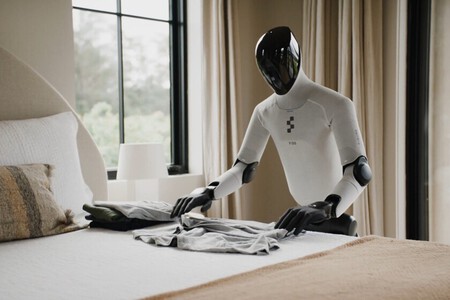
Figure 03
Based in California, Figure AI has made significant strides in developing humanoid robots designed for the home. Their latest model, Figure 03, is envisioned as a robotic butler that takes on various household chores. While earlier models were mostly gimmicks, the company now plans mass production. They aim to produce 12,000 robots a year, a promising start for the industry.
Figure AI is at the forefront of robotics in the United States. Their current valuation is $39 billion, with investments from tech giants like NVIDIA, Salesforce, Qualcomm, Intel, Microsoft, and even Jeff Bezos. Although it is not yet available for purchase, the intrigue around its pricing remains high.
Tesla
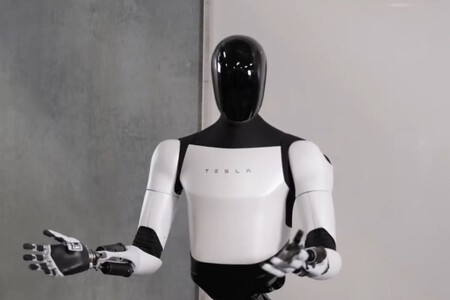
Tesla Optimus Gen 2
No introduction is needed for Tesla, known for its ambitious innovations. Announced in 2021, their foray into humanoid robots has intrigued many. They revealed a working prototype in 2022 and presented the Optimus Gen 2 in 2023. Although we haven’t seen it accomplishing household tasks, Tesla demonstrated its ability to manage fragile items like eggs. Musk claims the Optimus will be cheaper than a car (priced between $20,000 and $30,000), but we are still waiting for tangible results.
Musk remains determined to build “an army of robots.” He recently expressed concerns about control over this theoretical army. During Tesla’s latest earnings call, he reiterated the importance of maintaining influence over this burgeoning technology.
1X Technologies

Neo Gamma
1X Technologies, a Norwegian company with California roots, aims to develop robots that clean, organize, and run errands. Last year, they unveiled the Neo Beta robot and followed it with the Neo Gamma in February of this year, featuring advanced human interaction capabilities and manipulation skills.
The company plans to begin home deployments this year as part of a pilot project. They aim to manufacture 100,000 units by 2027 and “millions more by 2028.” Specific pricing details remain vague, but 1X asserts they will be competitively priced within the home robotics market. The company holds a valuation of $10 billion, with notable backers including OpenAI and EQT.
Unitree Robotics
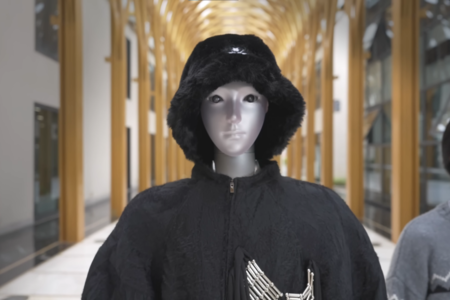
Unitree H2
Unitree Robotics, a company based in Hangzhou, China, has gained recognition for its quadruped robots and is now venturing into humanoid robots. Their latest model, Unitree H2, was recently unveiled and showcases capabilities such as dancing and martial arts; however, it’s not tailored specifically for household functions.
In China, exciting demonstrations featuring robots performing dancing and boxing have become popular, but practical applications still lag behind. Surprisingly, Unitree is already marketing humanoid robots, with the Unitree G1 priced at $16,000, while the Unitree H1 goes for €131,000.
Deep Robotics
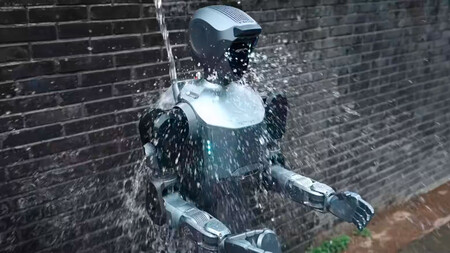
DR02
Another Chinese contender, Deep Robotics, forms part of the ‘Six Little Dragons,’ leading firms in AI and robotics. Initially focused on quadruped models, they have pivoted toward humanoid robots aimed at various sectors including industry and logistics. Their latest creation, the DR02, is designed to resist water and dust, suitable for outdoor work environments, with ambitions to expand into domestic applications.
What is the Point of a Humanoid Robot?
Opposing this trend are voices like Rodney Brooks, co-founder of iRobot, who argues that humanoid robots are impractical. He emphasizes that maintaining balance and energy for such robots can be unfeasible, particularly given the challenges of mimicking fine motor skills adeptly. According to Brooks, duplicating the dexterity of a human hand is nearly impossible.
Engineering expert Ehsan Saffari argues that making humanoid robots does not lead to efficiency. He suggests an analogy: “Imagine that instead of building a washing machine, we had created a humanoid robot to perform the task exactly as we did it: by hand.”
One rationale for designing robots in human likeness is to foster familiarity, akin to living with a roommate. Studies indicate that we tend to empathize more with anthropomorphized robots. This could contribute to the development of companion robots, as envisioned by Chinese manufacturers. However, the “uncanny valley” phenomenon shows that overly realistic robots often evoke discomfort.
Cost remains another significant issue. Many companies have yet to specify their product prices, raising concerns about their feasibility. Ultimately, the obsession with humanoid robots appears to stem more from cultural influences and science fiction narratives, like ‘I, Robot,’ than from any practical demand. A robot optimized for a specific function, such as vacuuming, will likely outperform a humanoid robot trying to mimic human activity.
Images | Figure, Tesla, 1X, Unitree, Deep Robotics
In Xataka | “When I see a humanoid robot, it scares me”: this is Smarttek, the Galician company that leads the window cleaning robot segment.