
U.S. Government Increases Reward for Venezuelan Leaders Amid Heightened Tensions
The ongoing political turmoil in Venezuela has reached a new stage as the United States recently raised the reward for information leading to the capture of Nicolás Maduro, the Venezuelan dictator, to $50 million. This reward also extends to Diosdado Cabello, the influential politician often viewed as Maduro’s right-hand man, for whom the U.S. has offered $25 million. In a show of force, Maduro has announced the mobilization of 4.5 million militiamen throughout the country in response to the increased pressure.
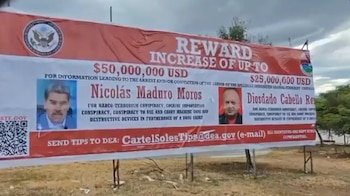
On the Colombian-Venezuelan border, posters appeared on August 23, 2025, at approximately 10:00 AM, announcing the U.S. rewards for information on Maduro and Cabello’s whereabouts. The deployment of these banners has caused quite a stir in the region, but local authorities have remained silent regarding their installation.
On the Venezuelan Colombo border, banners appeared with the reward for information about the whereabouts of Nicolás Maduro and that help with their capture – credit @CarlosFmejia/X
The arrest warrant against Maduro stems from serious allegations of narcoterrorism, conspiracy, and the transportation of cocaine into U.S. territory. Accusations also charge him with responsibility for the decline of democracy in Venezuela, identifying him as a leader of the Los Soles cartel, in partnership with Cabello. The banners highlight these charges and include an email contact for anyone with pertinent information.
Interestingly, a viral incident involved a man dressed in jeans, a white shirt, and a black cap who was seen removing one of the posters. He arrived in a car, effortlessly unwrinkled the advertisement, and then departed in the same vehicle.
Legal Concerns Over Poster Removal
Following public attention, the decision to dismantle the banner in Villa del Rosario was made after local authorities realized the installation lacked necessary permits. José Guillermo Ruiz, the Secretary of Government for Villa del Rosario, emphasized that the advertisement had been erected without proper authorization.
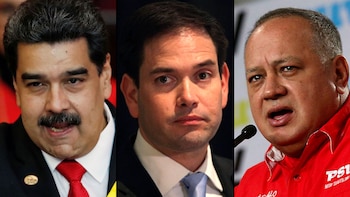
Marco Rubio referred to the reward for Nicolás Maduro and Diosdado Cabello, leaders of the Venezuelan regime – Social Networks Credit
Ruiz stated, “We got in touch with the person in charge of the process, the Undersecretary of Urban Control, who confirmed that there was no permission, and the advertising clearing was requested.” This swift action underlines the legal obligations set by municipal governance for outdoor advertising.
In a twist that underscores the high stakes involved, U.S. Senator Marco Rubio took to social media, calling for the capture of Maduro, stating that justice must be served. This heightened rhetoric adds another layer of pressure on the Venezuelan regime, emphasizing Washington’s commitment to holding its leaders accountable for allegations tied to drug trafficking and corruption.
U.S. Efforts to Combat Drug Trafficking
The Narcotics Rewards Program (NRP) has been pivotal in crafting Washington’s strategy in tackling international narcotics operations. The reward for Maduro and Cabello is part of this initiative, aimed at dismantling transnational drug networks. Recent reports indicate that U.S. efforts to bring Maduro and his associates to face justice stem from their highlighting of systematic cocaine trafficking operations in the region.
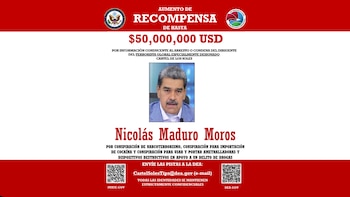
Authorities in the U.S. claim that the Los Soles cartel has amassed significant power in Venezuela, and officials have noted that it poses a direct threat to international security. In Rubio’s own words, the country has fallen under the rule of “a narcoterrorist organization that has taken over Venezuela.”
The current situation showcases how international political dynamics can shift rapidly. The U.S. is intensifying its actions against Caracas, providing an example of how global diplomacy and criminality intersect. The calls for action against Maduro and Cabello reveal not just a matter of local governance, but rather a significant international issue entangled with the fight against drug trafficking and authoritarianism.
In summary, as the stakes continue to rise, the world watches closely. The fate of Venezuela may hang in the balance as both local and international actors navigate the complexities of a politically charged landscape.