
In 2003, a young Guatemalan named Luis von Ahn published a unique study alongside two colleagues from Carnegie Mellon University and an IBM researcher. This pivotal project described an automated test that was easy for humans to solve but practically insurmountable for artificial intelligence systems.
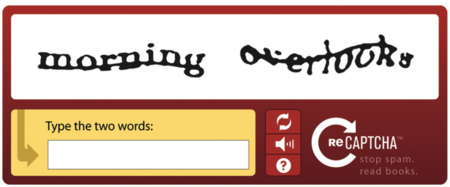
Those researchers called this test Captcha .
The concept was simple and centered on the well-known Moravec paradox : there are tasks that humans perform effortlessly, such as solving the visual puzzles presented by CAPTCHA, which machines struggle to complete.
<img alt="Luis von Ahn, creator of Duolingo" width="375" height="142" src="https://i.blogs.es/997360/650_1000_luis-von-ahn/375_142.jpg"/>This idea turned out to be extraordinary. Von Ahn later created an enhanced version he called reCAPTCHA , which not only verified whether users were human but also helped to train and perfect Optical Character Recognition (OCR) systems . This complementary idea was another “Eureka!” moment for von Ahn, ultimately making him a millionaire when Google acquired his service in 2009. He then embarked on another remarkable project: Duolingo .
A Dizzying (and Juicy) Evolution
As von Ahn made strides with his projects, CAPTCHA continued to grow and evolve, posing increasingly challenging puzzles for machines. Over time, we transitioned from basic CAPTCHAs to reCAPTCHAs that not only tested the abstract reasoning capacity of machines but also contributed to *artificial vision systems*, training them to recognize cars, buses, pedestrian crossings, and more.
However, as artificial intelligence improved, the battle between CAPTCHA systems and machines became even more fascinating. It turned into a unique game of cat and mouse with spambots, and whenever AI began to overcome CAPTCHA challenges, the puzzles became even more complex.
The cycle has repeated itself again recently.
This past Friday, a user in the R/OpenAI community on Reddit shared clips of a ChatGPT agent successfully overcoming one of the most popular reCAPTCHAs available on the Internet today. This particular system, called TURONSTIL from Cloudflare, features a simple box stating “I’m not a robot” that users must click. It may seem effortless, but it’s far more challenging for machines.
According to Cloudflare, this reCAPTCHA variant analyzes various signals such as mouse movement, the time taken to click, the “digital footprint” of the browser, the “reputation” of the user’s IP, and certain JavaScript execution patterns. These signals help determine whether a user is human or a potential bot. If there’s any suspicion, the system presents a follow-up CAPTCHA that requires solving a visual puzzle.
AI Does Not Know If It Is Human; It Only Tries to Operate as Such
The intuition here is interesting: OpenAI’s agent solved the CAPTCHA using a straightforward method—by analyzing what was displayed on the screen to take appropriate actions, a feat that had been difficult for AI until now. The agent even narrated its steps:
“The link is inserted, so I will click on the ‘verify that you are human’ button to complete the verification in Cloudflare. This step is necessary to prove that I am not a bot and continue with the action.”
In other words: the machine was mimicking human behavior . This isn’t entirely unusual considering that 1) AI does not actually comprehend what it is stating and 2) it has been trained to behave (at least, to a limited extent) like a human operator. Previous versions of AI struggled with this kind of system.
Does this mean CAPTCHA is facing extinction? Probably not. This is merely another round in the ongoing battle between bots and CAPTCHA systems. Similar to previous AI victories—like one in October 2024—this does not signify the end of user verification tests.
</div>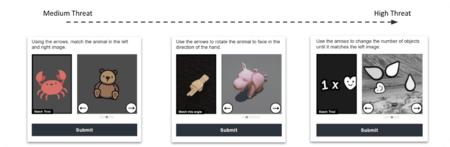
</div>In fact, modern CAPTCHA systems are designed not necessarily as impenetrable barriers but as mechanisms to slow down bots enough to render brute-force attacks impractical.
CAPTCHAs: Not Just Barriers, But Effective Bot Deterrents
As indicated by Arkose Labs, creators of MatchKey, stated: “There is no completely impenetrable CAPTCHA.” Their intention is to introduce an economic deterrent to prevent malicious bot behavior. This means that the cost associated with developing a bot capable of overcoming these CAPTCHAs often outweighs the benefits.
<img alt="If the question is whether AI is as capable as human intelligence, the answer is: solve this puzzle" width="375" height="142" src="https://i.blogs.es/45bc96/arc-agi-2/375_142.jpeg"/>Thus, there is little to worry about in the event that AI agents manage to solve modern CAPTCHAs. It’s just a matter of time before new CAPTCHA systems emerge, making it challenging for these agents. This is a similar concept underlying the ARC-AGI 2 TEST , designed to assess the visual understanding and abstract reasoning of AI systems, which is so intricate that even the best AI models struggle to exceed a 4% success rate.
Will there be a time when AI agents can surpass any CAPTCHA we devise? Possibly. If that day comes, we will face the challenge of determining how to coexist with machines in an era where the Internet may no longer distinguish between humans and AI.
In Xataka | Duolingo inaugurates a new era: when human talent is no longer essential.